
Selecting the wrong precision glass supplier is not merely an inconvenience. For procurement managers in aerospace, defence, and medical devices, a failed partnership can halt production lines, trigger regulatory non-conformances, and jeopardise programme timelines worth millions. Whether you are sourcing custom optical windows for avionics, borosilicate components for diagnostic equipment, or toughened glass panels for defence platforms, the stakes are unambiguously high. This guide walks you through a structured, evidence-backed process for identifying, assessing, and building enduring partnerships with precision glass manufacturers who can consistently meet your technical and delivery requirements.
Table of Contents
- Key prerequisites for partnering with precision glass manufacturers
- Step-by-step process for assessing and engaging manufacturers
- Quality control and pilot project verification
- Common pitfalls and how to avoid them
- What most procurement guides miss about glass manufacturer partnerships
- Partner confidently with trusted glass specialists
- Frequently asked questions
Key Takeaways
| Point | Details |
|---|---|
| Verify essential certifications | Always check for AS9100D, ISO 13485, and independently verify credentials before proceeding. |
| Dual-source for reliability | Splitting contracts reduces risk and assures continued supply even if one source fails. |
| Run pilot projects | Early pilot runs and sample checks reveal issues before committing to full-scale production. |
| Document every step | Thorough record keeping ensures traceability, compliance, and faster dispute resolution. |
| Prioritise collaboration | Technical co-development and clear communication build resilient, innovative supplier partnerships. |
Key prerequisites for partnering with precision glass manufacturers
With the risks clear, it is time to prepare your supplier shortlist and readiness checklist before approaching any manufacturer.
Before you engage a single potential supplier, your organisation must establish a set of non-negotiable prerequisites. These prerequisites serve two purposes: they filter out unsuitable manufacturers early, and they signal to qualified suppliers that your procurement process is rigorous and professional.
Certification requirements by sector
The baseline certifications differ by industry, but all demand documented, independently verified evidence of compliance. Aerospace and defence buyers must confirm AS9100D registration, which governs quality management systems for aviation, space, and defence organisations. Medical device procurement requires ISO 13485 certification, ensuring that the manufacturer operates a quality management system appropriate for medical components. For electronics and automotive applications, ISO 9001:2015 provides an acceptable foundation, though sector-specific supplements are often advisable.
Independent verification is essential. Supplier certifications for AS9100D should be confirmed using the OASIS database, the official registry maintained by the International Aerospace Quality Group. Relying solely on a manufacturer’s self-declaration is an inadequate practice in regulated procurement environments.
Beyond certifications, you also need to arrive at any supplier conversation with clearly defined glass specification guidelines. These should include material grades, tolerances, surface flatness requirements, coating specifications, and inspection criteria. Ambiguous requirements at this stage are a leading cause of costly rework later.
Prerequisite overview by industry sector
| Industry sector | Core certification | Additional requirements |
|---|---|---|
| Aerospace and defence | AS9100D | ITAR compliance, traceability documentation |
| Medical devices | ISO 13485 | Biocompatibility data, batch traceability |
| Electronics and automotive | ISO 9001:2015 | Process capability data (Cpk), AQL sampling plans |
| Lighting and optics | ISO 9001:2015 | Optical testing records, wavelength performance data |
Ensure your team has reviewed the above before issuing any request for quotation. Suppliers who cannot produce current, verified certifications promptly should be deprioritised immediately.
Key prerequisites to confirm before approaching any manufacturer:
- Verified AS9100D or ISO 13485 certification relevant to your sector
- Documented process capabilities, including tolerance ranges and surface finish standards
- Clear, engineering-approved drawings and material specifications
- Established quality escape procedures and corrective action processes
- Financial stability indicators and production capacity confirmation
Pro Tip: Request digital certification access and ask your shortlisted manufacturers to add your procurement team to their documentation update notifications. This eliminates the risk of working with a supplier whose certification has lapsed without your knowledge, a situation that has caused significant regulatory complications for defence buyers.
For manufacturers operating in the aerospace supply chain, it is also worth confirming whether their IT support for aerospace infrastructure supports secure data transfer and meets cybersecurity frameworks relevant to controlled technical information.
Step-by-step process for assessing and engaging manufacturers
Once your prerequisites are defined, it is time to move to active engagement and structured assessment of prospective partners.
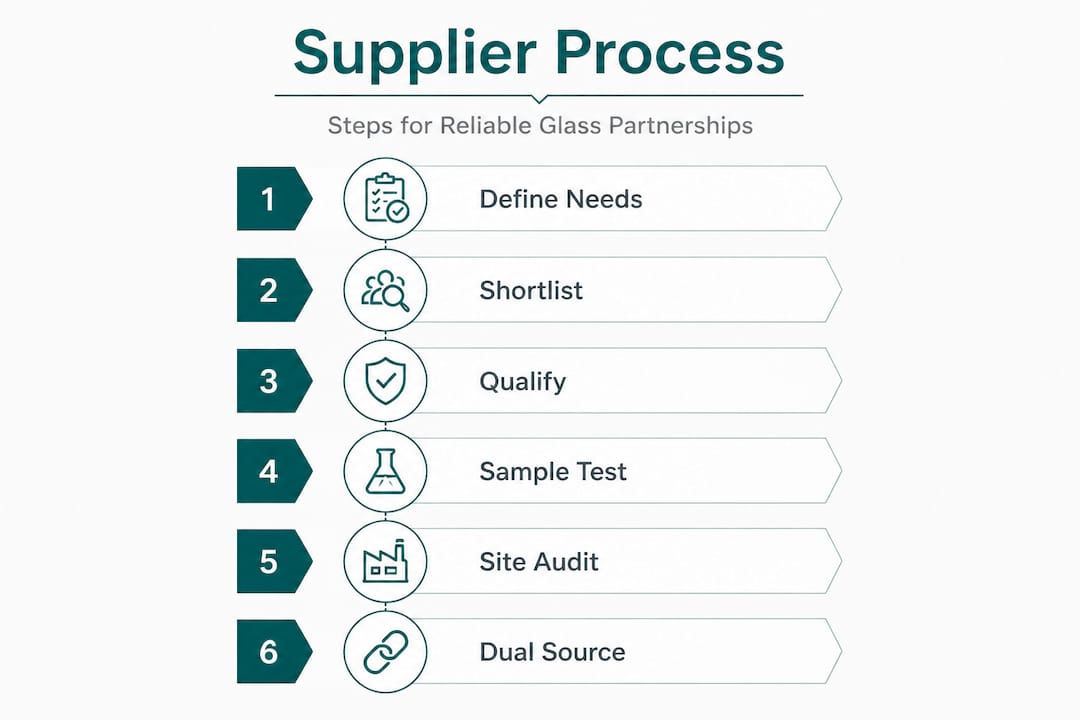
A disciplined, step-by-step approach prevents procurement teams from making reactive decisions under deadline pressure. Each step builds on the last, creating a defensible audit trail and a supplier relationship grounded in transparency.
1. Build a longlist from credible sources
Start with industry directories, trade associations, and referrals from programme partners. Your longlist should contain at least six to eight candidates. Avoid building shortlists from a single channel, as it introduces selection bias.
2. Issue an initial qualification questionnaire
Send a structured pre-qualification questionnaire covering certifications, production capacity, quality management processes, subcontractor use, and key customer references. The responses provide immediate insight into communication quality and technical competence.
3. Request pre-production samples
Before committing to an audit, ask for material samples or demonstration components manufactured to your stated tolerances. Reviewing these against your acceptance criteria reveals process capability without the full cost of an audit. Pilot projects and pre-production samples are a widely recognised method for confirming supplier suitability before full production commitments.
4. Conduct a structured site audit
An on-site audit of shortlisted manufacturers provides information that no document review can replicate. Evaluate the condition of equipment, the organisation of the production floor, how operators handle materials, and whether quality records are readily accessible. Pay particular attention to how the team responds to questions about past non-conformances.
5. Evaluate technical dialogue
Strong partners do not simply accept your drawings and return a price. They engage constructively, identify potential manufacturability issues, and suggest improvements. Assess the quality of this dialogue during your initial engagements. Manufacturers who refer your enquiry to a precision fabrication overview of their capabilities upfront tend to be more technically self-aware and transparent.
6. Establish dual-source arrangements
A single-source strategy is a liability in critical supply chains. Allocate production across two qualified suppliers using an 80/20 split: 80% of volume to your primary manufacturer and 20% to a secondary. This approach, endorsed broadly in defence and aerospace procurement practice, provides continuity assurance if your primary supplier encounters capacity or quality issues.
Supplier qualification method comparison
| Method | Time required | Cost level | Information quality |
|---|---|---|---|
| Document review | 1 to 2 weeks | Low | Moderate |
| Pre-production sample | 2 to 4 weeks | Moderate | High |
| Site audit | 1 to 3 days | Moderate to high | Very high |
| Pilot project | 4 to 12 weeks | High | Exceptional |
Pro Tip: During your first technical call with any manufacturer, note how quickly their engineering team grasps your application context. A manufacturer who asks the right questions within the first ten minutes is already showing you their partnership potential. Slow, generic responses are an early indicator of communication issues that will compound during production. For guidance on optimising glass sourcing decisions, review your supplier scoring methodology alongside this step.
Managing supplier manufacturing IT services compatibility is also increasingly important when integrating supplier data into enterprise resource planning systems, particularly in defence programmes with strict data governance requirements.
Quality control and pilot project verification
After engaging with potential partners, robust verification procedures ensure only the best advance to full production.
Quality control agreements are not a formality. They are the foundation upon which your confidence in a supplier is built. Establishing clear QC expectations before the first production order protects both parties and creates a shared language for managing non-conformances.
Critical QC steps to include in every partnership agreement:
- Incoming material verification records for all raw glass substrates
- In-process inspection checkpoints at grinding, polishing, coating, and final inspection stages
- First article inspection (FAI) reports to AS9100 or equivalent standards
- Certificate of conformance with every delivery, including batch traceability data
- Defined acceptance quality limit (AQL) sampling plans for high-volume orders
- Corrective and preventive action (CAPA) procedures with response time commitments
In-process inspections and pilot runs are the most reliable method for identifying process weaknesses before they escalate into production failures. A pilot project, structured correctly, exposes gaps in dimensional accuracy, surface quality, coating adhesion, and documentation rigour simultaneously.
“Thorough inspection at the pilot stage is not an overhead; it is the most cost-effective investment a procurement team can make. Identifying a dimensional non-conformance on 20 pilot components costs a fraction of the same issue discovered across a 500-piece production run.”
Evidence from precision manufacturing supports the value of this approach. Surface protection and rework data indicate that structured pilot projects and process controls can reduce subsequent rework by 25% or more in critical manufacturing environments. For high-specification glass components used in electronics or aerospace, this figure translates directly into programme savings and schedule certainty. The role of glass in electronics further illustrates why initial verification is particularly critical in environments where component failure carries downstream consequences.
Pro Tip: Do not limit pilot reviews to mechanical measurement data alone. Combine dimensional inspection with visual review under controlled lighting, review of process records, and a structured debrief with the manufacturer’s quality team. The debrief conversation itself reveals how transparently the supplier communicates findings and manages improvement.
Common pitfalls and how to avoid them
Having outlined the verification phase, understanding common missteps ensures a smooth and dependable partnership process.
Even well-resourced procurement teams with strong processes make avoidable errors when sourcing precision glass. Recognising these pitfalls before they occur is far preferable to managing their consequences mid-programme.
Mistakes that undermine glass manufacturing partnerships:
- Incomplete supplier audits: Conducting document-only reviews without visiting the production facility leaves significant risk undetected. A clean quality manual does not guarantee capable processes.
- Single-source dependency: Relying on one manufacturer without a qualified alternative creates a fragile supply chain. A capacity issue, quality escape, or financial difficulty at your sole supplier can halt your programme entirely.
- Unclear technical specifications: Submitting drawings without defined tolerances, material grades, or acceptance criteria forces the manufacturer to make assumptions. Those assumptions will not always align with your requirements.
- Skipping sample approval stages: Moving directly from quotation to production order without a first article inspection or pilot run removes your last practical opportunity to verify suitability before volume commitment.
- Neglecting ongoing performance monitoring: A supplier who performs well in the qualification phase can deteriorate over time if not subject to regular performance reviews and documented KPIs.
The dual-sourcing 80/20 approach is one of the most effective structural safeguards available to procurement managers. By maintaining an active secondary supplier at 20% of production volume, you keep the relationship current, the supplier familiar with your requirements, and your supply chain resilient. This is standard practice in defence and aerospace procurement and should be treated as a baseline expectation rather than an optional strategy.
For sector-specific guidance on how these considerations apply to structural and optical components, the aerospace glass solutions resources provide a useful reference point alongside your procurement procedures.
Pro Tip: Document every communication, decision, and deviation throughout the qualification and production phases. Traceability is both a regulatory requirement in many sectors and a practical safeguard when disputes or quality investigations arise. A timestamped record of supplier dialogue, sample approvals, and agreed specification changes is invaluable during audits.
For reference on qualification standards in demanding manufacturing contexts, certification test plate comparisons illustrate the kind of rigorous qualification thinking applied across precision manufacturing disciplines.
What most procurement guides miss about glass manufacturer partnerships
Most procurement guidance in this area focuses almost entirely on compliance documentation, audit checklists, and contractual safeguards. These are necessary, but they are not sufficient. In our experience working with buyers across aerospace, defence, and medical device programmes, the partnerships that perform best over time are not the ones with the most exhaustive contracts. They are the ones where genuine technical collaboration developed early.
The most resilient supplier relationships we have observed begin with joint prototype development, not formal tenders. When procurement teams bring a manufacturer into the design phase rather than arriving with a finalised drawing and a target price, something different happens. The manufacturer contributes manufacturability insight that genuinely improves the component. The buyer gains confidence in the supplier’s capability long before production begins. Both parties develop a shared investment in the outcome.
This matters enormously when supply chain stress occurs. A manufacturer who has co-developed a component with your engineering team will make a telephone call at 07:00 on a Monday to flag an incoming material issue. A transactional supplier will process a non-conformance report and wait for formal instruction. The distinction between these two behaviours, when a programme deadline is at risk, is significant.
Procurement managers are often under pressure to prioritise price and lead time above all else. We understand that commercial reality. But in sectors where component failure is not an option, the lowest-cost supplier who cannot sustain open technical dialogue is a false economy. The rework costs, schedule delays, and qualification re-runs that follow a poorly chosen partnership consistently outweigh any initial saving.
Our recommendation is to treat communication quality, technical responsiveness, and willingness to co-develop solutions as weighted criteria in your supplier scoring, on a par with certification status and pricing. Use early-stage optical glass design collaboration conversations as a genuine evaluation tool. A manufacturer who engages thoughtfully at that stage has already shown you something important about how they will behave throughout the partnership.
The procurement managers who build the most dependable glass supply chains are not necessarily those with the most sophisticated contracts. They are the ones who chose partners they could talk to honestly, and then structured the relationship to reward that transparency.
Partner confidently with trusted glass specialists
Applying the steps in this guide reduces supplier risk and accelerates your route to qualified, production-ready precision glass components. Choosing the right manufacturer from the outset shortens your qualification timeline, protects your programme schedule, and ensures the quality standards your end application demands.

At Precision Glasses, we work alongside procurement teams in aerospace, defence, medical devices, and electronics to deliver custom glass components with meticulous attention to specification, traceability, and on-time delivery. Our glass solutions for aerospace and our full range of technical glass services are designed to support demanding programmes from first prototype through to sustained production. If you are ready to establish a reliable, quality-assured supply partnership, view all industry solutions or contact our team to discuss your specification requirements directly.
Frequently asked questions
Which certifications are essential for precision glass manufacturers?
AS9100D is essential for aerospace and defence applications, while ISO 13485 is required for medical device components. Always verify certifications independently using the OASIS database or equivalent registry rather than relying on supplier self-declaration.
What is dual-sourcing and why does it matter?
Dual-sourcing splits production between two qualified manufacturers, typically on an 80/20 volume basis, ensuring supply continuity if your primary supplier encounters capacity constraints or quality issues.
How can I verify quality during a new manufacturer partnership?
Pilot projects, pre-production samples, and in-process inspections at defined production checkpoints are the most reliable tools for confirming quality standards before committing to full-scale production volumes.
What common mistakes should defence and aerospace buyers avoid?
Relying on a single source, conducting document-only audits without site visits, and bypassing pilot verification stages are among the most consequential errors. Site audits and pilot projects remain the most effective safeguards against costly downstream quality failures.
Recommended
- Glass in electronics: Performance, reliability and procurement insights – Precision Glass
- How to optimise glass sourcing for precision: 5 key steps – Precision Glass
- Precision Glass – Medical – Defense – Engineering – Security – Optical – Automotive – Electronic
- Glass fabrication: Precision processes for critical industries – Precision Glass
- Wholesale – Herbilabs Labware