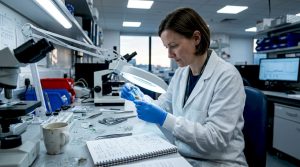

Glass is defined as the primary structural and optical material in modern diagnostic devices, chosen for its unmatched combination of optical clarity, chemical inertness, and dimensional stability. From fundus imaging cameras to microfluidic lab-on-a-chip platforms, glass components in diagnostics determine whether a test result is accurate or compromised. Materials such as N-BK7 optical glass and SCHOTT D263® T eco have become reference standards precisely because their physical properties align with the demands of clinical and research environments. Understanding the role of glass in diagnostics is not academic. It directly affects device performance, regulatory compliance, and patient outcomes.
What unique properties make glass suited for diagnostic applications?
Glass outperforms competing materials in diagnostics because it combines optical, chemical, and structural advantages that no single alternative replicates. Each property addresses a specific failure mode that degrades diagnostic accuracy.
Optical transparency and imaging fidelity
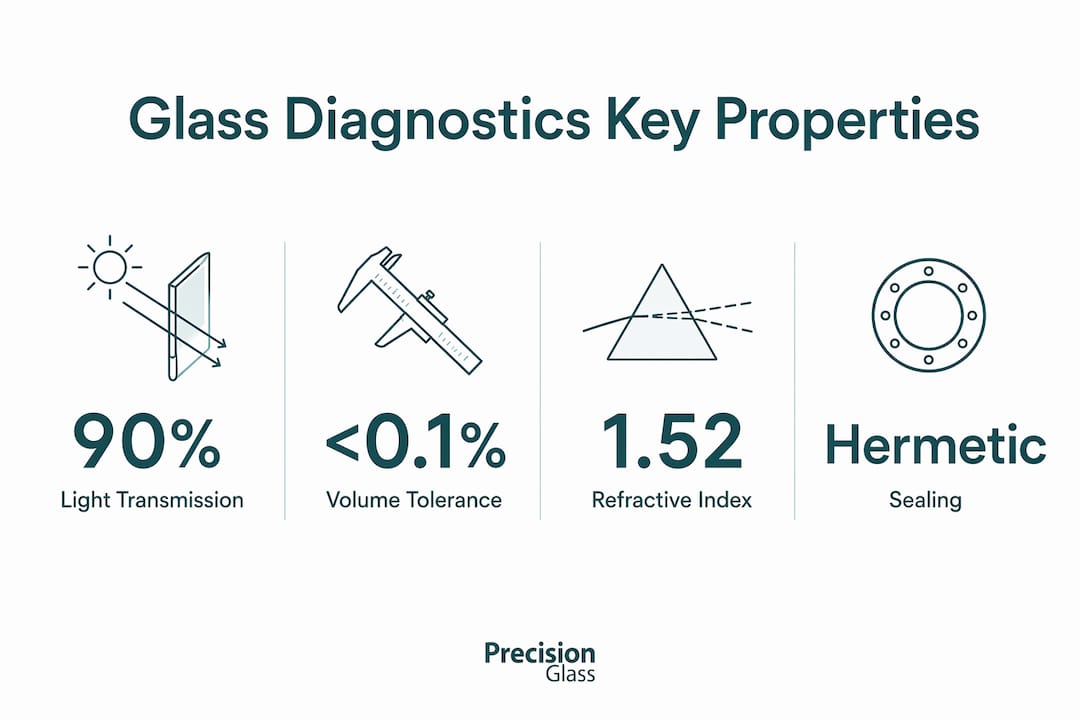
N-BK7 optical glass delivers approximately 90% visible light transmission with a refractive index of approximately 1.52 and an Abbe number of approximately 64. These figures translate directly into high-contrast retinal imaging, where a DenseNet121 deep learning model achieved 96.85% accuracy for glaucoma detection using N-BK7 optics. Minimal chromatic aberration at this Abbe number means colour fringing does not distort tissue boundaries in pathology imaging. For diagnostic developers, this is not a marginal gain. It is the difference between a clinically valid image and one that requires manual correction.
Chemical inertness and sample integrity
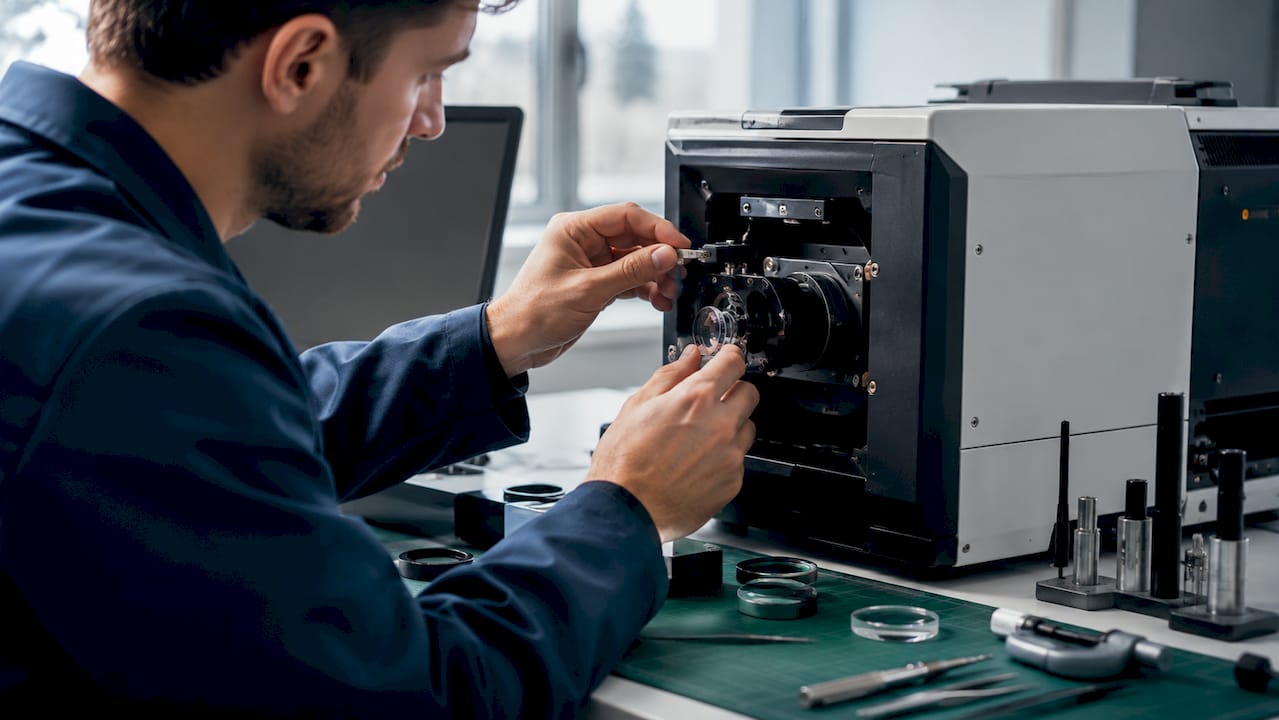
Glass is non-porous, bio-compatible, and chemically inert, which prevents sample contamination and maintains assay integrity throughout the testing process. Plastics absorb small molecules and leach plasticisers, both of which interfere with reagent concentrations. Glass does neither. This property is particularly critical in immunoassay platforms and biosensors, where even trace contamination invalidates quantitative results.
Structural stability and electrical insulation
Glass wafers reduce parasitic capacitance and signal loss compared to silicon in MEMS-based diagnostic sensors. Silicon is a semiconductor, which introduces signal interference at high frequencies. Glass acts as a true electrical insulator, improving fidelity in sensors that measure bioelectrical signals or capacitance changes. This property makes glass the preferred substrate in microelectromechanical systems (MEMS) used for point-of-care diagnostics.
Nanostructuring and surface coatings
Nanostructuring and specialised coatings such as MgF2 anti-reflective films and biofunctional layers extend glass performance well beyond its raw material properties. Anti-reflective coatings reduce surface reflection losses in optical diagnostic instruments. Biofunctional layers reduce non-specific protein binding in biosensors, which directly improves detection sensitivity. These surface modifications mean that glass is not a passive substrate. It is an active functional component in the diagnostic device.
Pro Tip: When specifying glass for a biosensor application, request surface functionalisation data from your supplier alongside raw transmission figures. A coated glass component often outperforms a higher-grade uncoated alternative in real assay conditions.
How is glass used in modern diagnostic devices?
The applications of glass in lab diagnostics span optical imaging, microfluidics, and flexible nanoelectromechanical systems. Each application exploits a different combination of glass properties.
Microfluidic flow cells. SCHOTT D263® T eco glass is the material of choice for microfluidic flow cells used in diagnostic reagent handling. Channel heights range from 100 µm to 1,000 µm with a channel aspect ratio of 5:1. These tight tolerances allow significant reductions in reagent volumes and associated costs. For diagnostic developers working on high-throughput platforms, this directly affects the economics of test production.
Fundus imaging cameras. N-BK7 optical glass forms the lens elements in fundus cameras used for retinal screening. Its high transmission and low dispersion produce the image quality required for AI-assisted glaucoma and diabetic retinopathy detection. The 96.85% detection accuracy achieved with DenseNet121 models depends on the optical glass delivering consistent, artefact-free images across patient populations.
Lab-on-a-chip flexible NEMS. Flexible glass nanoelectromechanical systems (NEMS) represent one of the most significant advances in portable diagnostics. Glass substrates in these devices maintain dimensional stability under mechanical flexion while preserving optical and chemical performance. This combination enables wearable and implantable diagnostic formats that rigid silicon cannot support.
Point-of-care diagnostics in resource-limited settings. Glass-based lab-on-a-chip devices are particularly well suited to onsite diagnostics where laboratory infrastructure is unavailable. Their chemical stability means they do not require refrigerated storage of reagent-coated components. Their optical clarity supports fluorescence-based detection without expensive external optics.
“Glass’s superior inertness and optical qualities make it the material of choice in diagnostics where sample integrity and image quality are critical.” — Advantages of glass in lab-on-a-chip diagnostics
How glass aids in diagnostics at the device level is therefore not a single mechanism. It is a convergence of material properties applied across multiple device architectures, each with distinct performance requirements.
What manufacturing standards govern diagnostic glass components?
Precision manufacturing is not optional in diagnostic glassware. It is the mechanism by which material properties translate into reliable clinical results.
Class A versus Class B volumetric glassware
Class A glassware requires less than 0.1% measurement variance. A 0.2% volume error produces a 0.2% concentration error, which is sufficient to cause assay failures under regulatory limits. This is not a theoretical risk. In serial dilution workflows, Class B glassware causes cumulative concentration errors that compound across dilution steps and diverge beyond acceptable assay precision. The consequence in a clinical setting is a result that cannot be validated, which may require the entire test series to be repeated.
| Glassware class | Volume tolerance | Risk in diagnostics |
|---|---|---|
| Class A | Less than 0.1% | Meets regulatory precision requirements |
| Class B | Up to 0.2% | Cumulative errors in serial dilutions |
Standardisation around Class A glassware transforms reproducibility from a best practice into a regulatory requirement in critical diagnostic measurements.
Anodic bonding and wafer-level integration
Anodic bonding creates glue-free, hermetic seals between glass and silicon wafers in microfluidic diagnostic devices. Adhesive-based assembly introduces chemical leaching risks that interfere with optical diagnostics and compromise sample integrity. Anodic bonding eliminates both risks. The resulting seal withstands autoclave sterilisation, which is a practical requirement for reusable diagnostic components in clinical environments. Wafer-level integration also improves dimensional consistency across production batches, which is critical for devices where channel geometry determines flow rate and reagent mixing ratios.
Pro Tip: Specify anodic bonding explicitly in your procurement documentation for microfluidic glass components. Adhesive-bonded alternatives may meet initial dimensional tolerances but fail under sterilisation cycles or introduce assay interference over time.
Understanding the precision glass manufacturing workflow from raw material selection through to quality assurance is the foundation for sourcing diagnostic-grade components that meet these standards consistently.
How does glass compare with plastics and silicon in diagnostics?
Glass is not the only material used in diagnostic devices, but it holds specific advantages over both plastics and silicon that are difficult to replicate.
| Property | Glass | Plastics | Silicon |
|---|---|---|---|
| Optical transparency | High, minimal distortion | Variable, prone to yellowing | Opaque in visible spectrum |
| Chemical inertness | Excellent, non-porous | Poor, absorbs small molecules | Good, but surface oxidation varies |
| Electrical insulation | Excellent | Good | Poor, semiconductor behaviour |
| Structural stability | High, dimensionally stable | Low, deforms under heat | High, brittle |
| Manufacturing scalability | Moderate, precision required | High, low-cost moulding | High, established wafer processes |
| Cost | Moderate to high | Low | Moderate to high |
Plastics offer lower manufacturing costs and easier moulding, which makes them attractive for single-use consumables. The trade-off is optical quality and chemical contamination risk. Autofluorescence in plastic substrates creates background noise in fluorescence-based assays, a problem glass does not present. Silicon offers excellent structural properties and established semiconductor fabrication processes, but its opacity in the visible spectrum eliminates it from optical diagnostic applications. Glass wafers provide superior insulation and enable low signal interference in sensors, an advantage silicon cannot match in high-frequency MEMS diagnostics. The benefits of glass in medical tests therefore reflect a material that occupies a specific performance tier. Where optical quality, chemical integrity, and electrical insulation must coexist in a single component, glass is the only material that delivers all three without compromise.
Key takeaways
Glass is the definitive material for diagnostic devices where optical clarity, chemical inertness, and electrical insulation must coexist in a single component without compromise.
| Point | Details |
|---|---|
| Optical performance | N-BK7 glass delivers 90% visible light transmission, enabling AI-assisted glaucoma detection at 96.85% accuracy. |
| Chemical inertness | Glass prevents sample contamination and reagent interference that plastics cannot avoid in assay environments. |
| Manufacturing precision | Class A glassware with less than 0.1% tolerance is a regulatory requirement, not a preference, in clinical diagnostics. |
| Anodic bonding | Glue-free hermetic seals eliminate adhesive contamination and allow autoclave sterilisation in reusable devices. |
| Material comparison | Glass outperforms plastics on optical quality and silicon on electrical insulation in diagnostic sensor applications. |
Glass in diagnostics: where the field is heading
By Alexandra
The conversation around glass in diagnostic technology has shifted considerably over the past few years. When I first began working closely with diagnostic device developers, the material selection discussion was largely binary: glass for performance, plastic for cost. That framing is now too simple.
What I find genuinely compelling is the trajectory of surface functionalisation. Biofunctional coatings and nanostructured glass surfaces are not incremental improvements. They are redefining what a glass component can do inside a diagnostic device. A substrate that actively resists non-specific protein binding changes the sensitivity floor of a biosensor. That is a functional gain that no amount of instrument calibration can replicate if the substrate itself is the source of noise.
The challenge I see most consistently in practice is the gap between material specification and manufacturing execution. Developers specify N-BK7 or SCHOTT D263® T eco correctly, then accept components that have not been validated for surface quality or bonding integrity. The quality standards in glass manufacturing that govern optical and dimensional tolerances exist precisely because this gap has real consequences in clinical settings.
Miniaturisation is the other pressure point. Flexible glass NEMS are genuinely exciting, but the manufacturing tolerances required for sub-millimetre channel geometries in flexible substrates are at the edge of what most suppliers can deliver consistently. The developers who will succeed in this space are those who treat their glass supplier as a technical partner from the design stage, not a commodity vendor at the procurement stage.
The importance of glass in testing will only grow as diagnostic devices become smaller, more sensitive, and more integrated. The material itself is not the constraint. The constraint is the precision with which it is specified, manufactured, and validated.
— Alexandra
Precision Glasses: glass components for diagnostic device development
Diagnostic device developers require glass components that meet exacting optical, chemical, and dimensional specifications from the first prototype through to full production.

Precision Glasses designs, fabricates, and supplies precision optical components for medical diagnostic instruments, including fundus imaging optics, microfluidic substrates, and MEMS-compatible glass wafers. Every component is manufactured to the tolerances that clinical and regulatory environments demand, with full quality assurance documentation. Precision Glasses works directly with diagnostic developers at the design stage to specify the correct glass type, surface treatment, and bonding method for each application. Explore the full range of diagnostic and medical glass solutions to find the right component specification for your device.
FAQ
What is the role of glass in diagnostics?
Glass provides the optical clarity, chemical inertness, and structural stability that diagnostic devices require for accurate, contamination-free results. It is the primary substrate material in optical imaging systems, microfluidic flow cells, and MEMS-based sensors.
Why is N-BK7 glass used in diagnostic imaging?
N-BK7 delivers approximately 90% visible light transmission with a refractive index of approximately 1.52, producing the high-contrast, low-distortion images required for AI-assisted retinal and pathology diagnostics.
What is the difference between Class A and Class B glassware in diagnostics?
Class A glassware maintains less than 0.1% volume tolerance, meeting regulatory precision requirements. Class B glassware can introduce up to 0.2% volume error, which compounds into unacceptable concentration errors during serial dilutions.
Why is anodic bonding preferred in microfluidic diagnostic devices?
Anodic bonding creates hermetic, glue-free seals between glass and silicon wafers, eliminating adhesive contamination and allowing autoclave sterilisation. This makes it the standard bonding method for reusable and high-precision microfluidic components.
How does glass compare with plastic in lab-on-a-chip diagnostics?
Glass is non-porous, chemically inert, and does not autofluoresce, which prevents the background noise and reagent contamination that plastic substrates introduce in fluorescence-based assays.