
Automotive glass is defined as the primary optical interface through which ADAS sensors perceive the road environment. The role of glass in ADAS systems extends far beyond structural protection. It directly governs whether a forward-facing camera can resolve a pedestrian at 60 metres, whether a lane-departure warning fires correctly, or whether an automatic emergency braking system responds in time. ADAS cameras require less than 0.1 diopter of optical distortion tolerance. That threshold is more than twice as strict as the 0.25 diopter allowance acceptable for human vision, which tells you immediately that standard glazing specifications are insufficient for sensor-grade applications.
How does glass affect ADAS sensor performance and safety?
Glass quality determines the reliability of every sensor signal passing through the windscreen. ADAS cameras operate with a field of view spanning 30–60 degrees horizontally and 15–30 degrees vertically, requiring a minimum of 1–2 megapixels resolution at 30–60 frames per second. Any optical aberration within that zone degrades the image data before it reaches the processing unit.
Windshield damage within the camera viewing zone causes 35–75% degradation in system performance, including a 35–50% increase in false alarms and a 30% failure rate in emergency braking hazard detection. Those figures represent real collision risk, not theoretical loss of function. A chip or crack that a driver barely notices can render lane-keeping assist unreliable or prevent automatic emergency braking from activating at all.
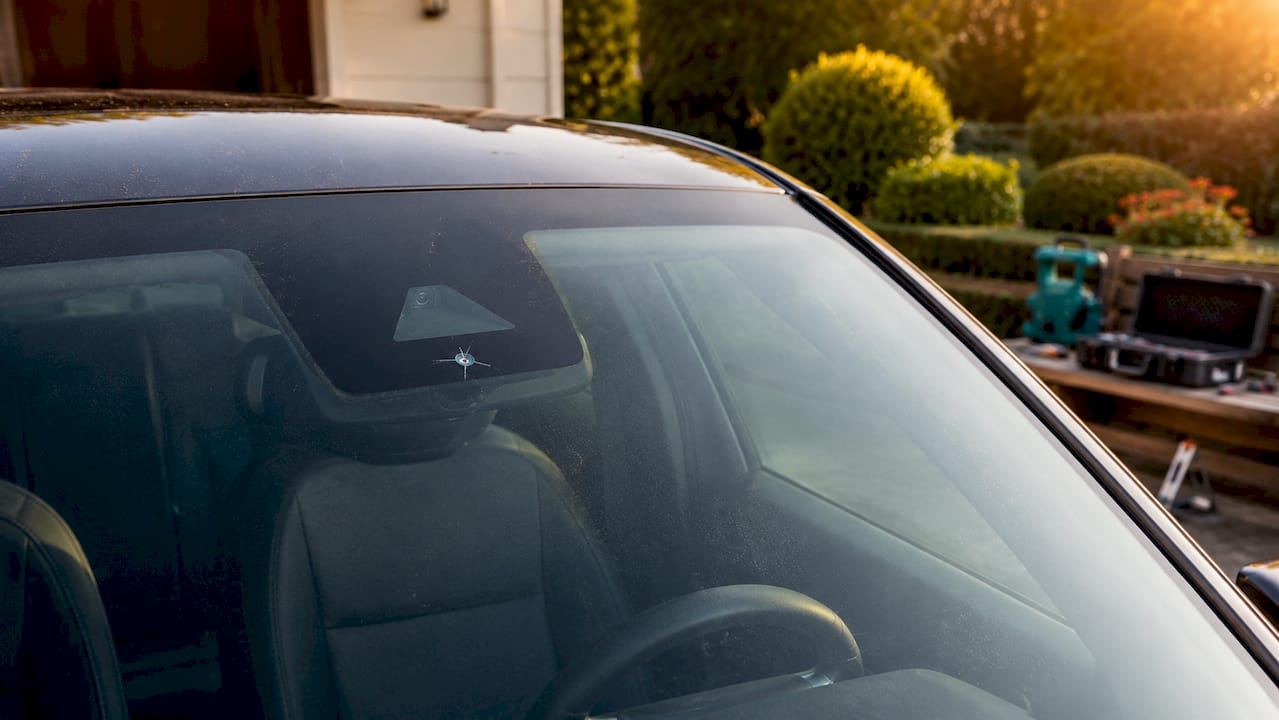
The optical distortion problem is more subtle than visible damage. Even a glass panel that appears undamaged can introduce refractive errors if its thickness varies beyond tolerance or if the inner surface has minor surface irregularities from poor polishing. Automotive glass is an active engineering platform balancing structural, acoustic, thermal, and optical requirements simultaneously. Engineers who treat it as a passive structural component will consistently underestimate its influence on sensor output.
The table below summarises how glass condition maps to ADAS performance outcomes:
| Glass condition | Primary effect on ADAS |
|---|---|
| Undamaged, OEM-spec | Full sensor accuracy within design parameters |
| Minor chip outside camera zone | Negligible effect on sensor performance |
| Crack within camera zone | Up to 75% system performance degradation |
| Aftermarket glass with excess distortion | Calibration failure, persistent false alarms |
| Incorrect thickness or curvature | Focal point shift, silent sensor failure |
What are the calibration challenges after windshield replacement or repair?
Recalibration is not optional after windscreen replacement. Nine out of ten vehicles from model year 2023 or newer require professional recalibration to realign ADAS cameras with the vehicle’s thrust line. Skipping this step leaves sensors pointing at the wrong area of the road, often without triggering any dashboard warning.
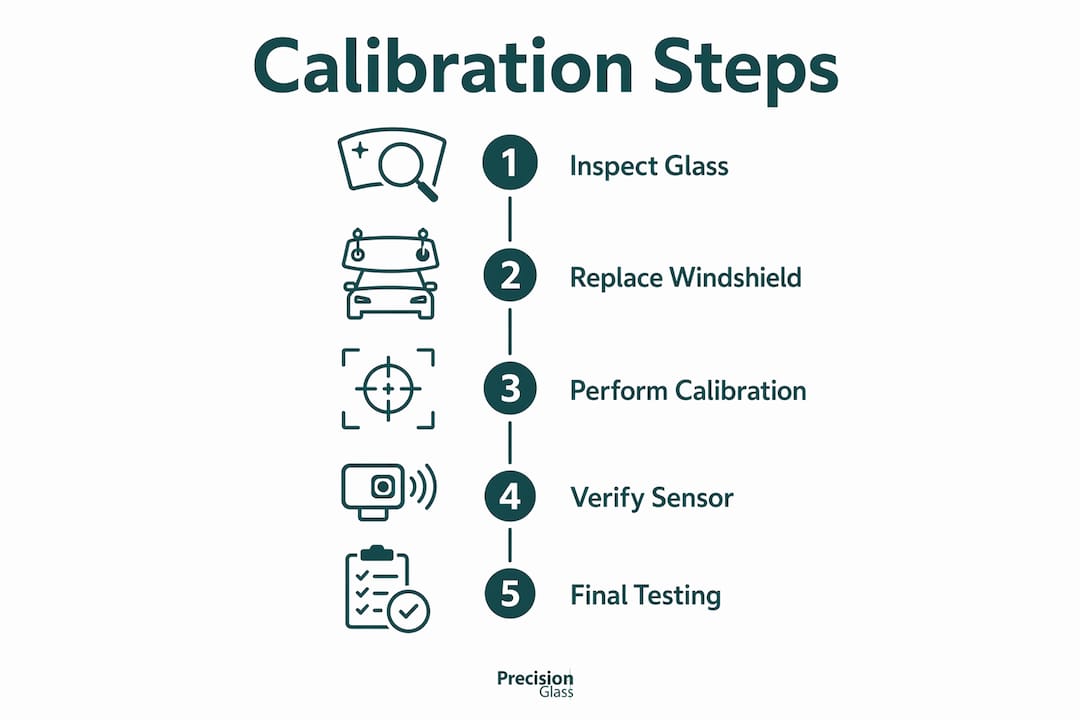
Two calibration methods exist: static and dynamic. Static calibration uses a fixed target board positioned at a precise distance and angle in a controlled workshop environment. Dynamic calibration requires driving the vehicle at a specified speed on a road with clear lane markings while the system self-corrects. Many vehicles require both methods in sequence, and the choice depends on the manufacturer’s specification, not the technician’s preference.
The most common calibration failures trace back to installation errors rather than calibration procedure errors. Improper glass thickness, bracket positioning, or adhesive curing causes silent sensor failure. The camera shifts its focal point by fractions of a millimetre, the system appears to function normally, and the driver receives no warning. OEM bonding of camera brackets uses ±0.5mm positioning tolerance with robotic jigs. Replicating that tolerance during aftermarket installation is difficult without equivalent tooling.
- Verify the replacement glass meets OEM optical distortion specifications before installation begins.
- Use manufacturer-specified adhesive and allow full curing time before any calibration attempt.
- Confirm ride height and tyre pressure match manufacturer specifications, as both affect camera angle.
- Perform static calibration first, then dynamic calibration where the vehicle specification requires both.
- Document the calibration result and retain it as part of the vehicle service record.
Pro Tip: Calibration failures linked to aftermarket glass sometimes require a second replacement with OEM glass, effectively doubling labour and parts cost. Specifying OEM-equivalent glass from the outset is the more cost-effective decision.
Which glass technologies are emerging for ADAS and autonomous vehicle sensor integration?
The next generation of automotive glazing treats the windscreen as an active sensor platform rather than a passive barrier. Two technologies are leading this shift: electrochromic dynamic glass and near-infrared transparent glazing zones.
Electrochromic dynamic glass manages light transmission in real time, reducing glare from low sun angles and oncoming headlights without colour distortion. That last point matters for ADAS. Traffic signal recognition depends on accurate colour rendering. A tint that shifts the red channel even slightly can cause a camera to misclassify a signal state. Dynamic glass maintains neutral colour management while controlling luminance, preserving both human visibility and sensor image quality simultaneously.
Near-infrared transparent zones address a different problem. LiDAR sensors operate in the near-infrared spectrum, and standard laminated glass attenuates that signal significantly. Sensor-optimised glass with NIR transparency enhances LiDAR and multi-sensor fusion capabilities, which are foundational to 360-degree environmental perception in autonomous vehicles. Integrating these zones requires precise control over glass composition and coating during fabrication. You can read more about how glass characteristics enhance sensor clarity in applications where multi-sensor fusion is a design requirement.
Successful autonomous vehicle programmes depend on early collaboration between glass designers and ADAS sensor teams. Sensor-optimised zones must be defined during the glazing design phase, not retrofitted. This requires glass manufacturers to work from sensor field-of-view maps and wavelength transmission specifications from the outset. The glass component then becomes a co-engineered element of the sensor system, not a separate procurement item.
The practical benefits of these emerging technologies include:
- Reduced false positives from glare-induced image saturation in camera-based systems
- Improved LiDAR point cloud density through NIR-transparent glazing zones
- Consistent sensor performance across high-contrast lighting conditions, including tunnels and direct sunlight
- Reduced reliance on post-processing algorithms to compensate for optical artefacts introduced by the glass
Sealing and assembly integrity also matters at this level of precision. Components such as EPDM-sealed sight glass assemblies demonstrate how controlled sealing standards translate directly into optical and structural reliability in demanding environments.
What best practices should engineers follow for glass in ADAS systems?
The specification process is where most ADAS glass problems originate. Engineers who specify glazing without referencing sensor optical requirements create downstream calibration and performance problems that are expensive to resolve. The sub-0.1 diopter distortion threshold is a hard design constraint, not a guideline. Glass that does not meet it will degrade sensor performance regardless of how well the rest of the system is engineered.
Pro Tip: Request optical distortion maps from your glass fabricator for every batch. A single panel that exceeds the 0.1 diopter threshold within the camera zone can cause calibration failure across an entire production run. The automotive glass quality checklist published by Precision Glasses provides a structured framework for incoming inspection.
The following practices define a reliable ADAS glass specification and installation process:
- Specify sensor-optimised glazing zones in the glass drawing, with optical distortion limits stated as a measurable tolerance, not a general requirement.
- Require fabricators to provide batch-level optical test data, including transmitted wavefront distortion measurements across the camera field of view.
- Mandate OEM-equivalent bracket bonding procedures, including adhesive type, cure time, and positional tolerance of ±0.5mm or better.
- Include glass type and batch number in the vehicle’s calibration record to enable traceability if sensor issues emerge post-delivery.
- Review the automotive glass fabrication guide to align your manufacturing specifications with the precision requirements that ADAS integration demands.
Material selection also affects long-term performance. Acoustic interlayers used in laminated windscreens can introduce optical non-uniformity if not specified correctly. Thermal gradients across the glass surface affect refractive index distribution, which in turn affects camera image quality in extreme temperature conditions. These are not edge cases. They are routine operating conditions for vehicles in northern European climates or high-altitude environments.
Key takeaways
Glass is the single most critical optical component in any ADAS sensor chain, and its specification, fabrication, and installation must meet sensor-grade tolerances to maintain system safety.
| Point | Details |
|---|---|
| Optical distortion threshold | ADAS cameras require less than 0.1 diopter distortion, far stricter than human vision standards. |
| Damage causes serious risk | Windshield damage in the camera zone causes up to 75% system performance degradation. |
| Recalibration is mandatory | Nine in ten 2023-or-newer vehicles require professional recalibration after windscreen replacement. |
| Silent failure is the primary hazard | Incorrect glass or bracket positioning causes sensor failure without triggering any driver warning. |
| Emerging technologies expand glass function | Electrochromic and NIR-transparent glazing actively improve sensor performance across lighting conditions. |
Why glass deserves more engineering attention than it typically receives
The automotive industry has spent decades refining sensor hardware, processing algorithms, and software architectures for ADAS. Glass has often been treated as a procurement afterthought. That is a structural mistake, and I have seen its consequences in programmes where sensor performance targets were missed not because of sensor design flaws, but because the glazing specification was written by a purchasing team rather than an optical engineer.
The silent failure risk is what concerns me most. When a camera bracket is bonded 0.8mm out of position, or when an aftermarket panel introduces 0.15 diopters of distortion in the camera zone, the system does not alert the driver. It simply performs less reliably. In a lane-keeping or emergency braking context, that reduced reliability is a safety liability that no one in the supply chain has formally accepted.
The future I find genuinely interesting is glass as an active platform. Electrochromic modulation, NIR-transparent zones, and eventually heads-up display integration within the same laminated structure will make the windscreen one of the most complex engineered components in the vehicle. That shift demands that glass designers and sensor engineers work from a shared specification document from day one of a programme. The programmes that get this right early will have a measurable advantage in sensor reliability and calibration pass rates at end-of-line testing.
— Alexandra
Precision Glasses: engineered glass for ADAS-critical applications
Automotive engineers working on ADAS integration need a glass fabricator who understands sensor optical requirements, not just structural glazing standards. Precision Glasses designs and fabricates custom glass components to the tolerances that sensor-grade applications demand, including controlled optical distortion, NIR transmission properties, and meticulous quality assurance at batch level.

Our work process covers design, fabrication, polishing, and quality verification, with full traceability from raw material to delivered component. Whether you are specifying glazing zones for a forward-facing camera system or developing a multi-sensor fusion platform, Precision Glasses provides the technical glass solutions your programme requires. Contact us at glassprecision.com to discuss your ADAS glass specification.
FAQ
What distortion tolerance does ADAS glass require?
ADAS cameras require less than 0.1 diopter of optical distortion, which is more than twice as strict as the 0.25 diopter tolerance acceptable for human vision. Standard automotive glazing does not automatically meet this threshold.
Does every windscreen replacement require ADAS recalibration?
Nine out of ten vehicles from model year 2023 or newer require professional recalibration after windscreen replacement. Skipping recalibration risks silent sensor misalignment with no dashboard warning to the driver.
What is the risk of using aftermarket glass in an ADAS vehicle?
Aftermarket glass that exceeds the 0.1 diopter distortion limit within the camera zone causes calibration failure and may require replacement with OEM glass, doubling labour and parts cost.
How does electrochromic glass benefit ADAS cameras?
Electrochromic dynamic glass modulates light transmission in real time, reducing glare from low sun angles and oncoming headlights while maintaining neutral colour rendering essential for traffic signal recognition.
Why do glass designers need to collaborate with ADAS sensor teams?
Sensor-optimised glazing zones, including NIR-transparent areas for LiDAR, must be defined during the glass design phase. Retrofitting these features after the glazing geometry is fixed is not technically feasible.