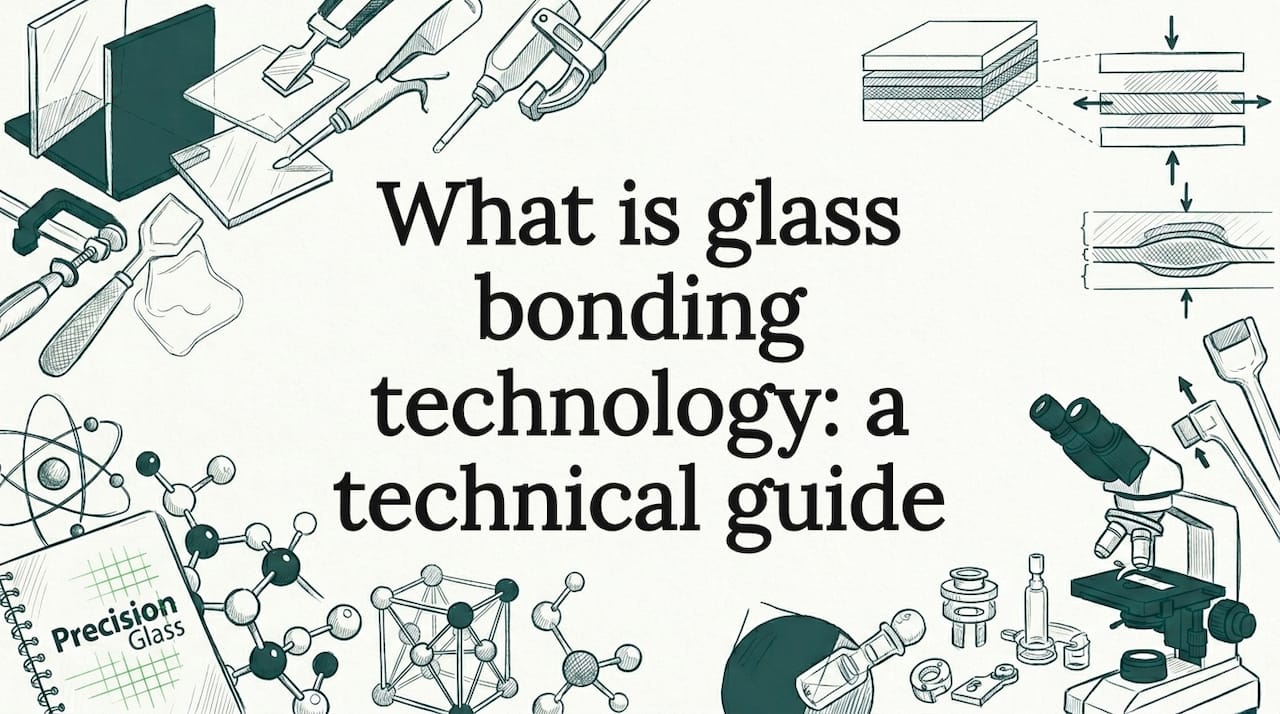
Glass bonding technology is defined as the engineering practice of permanently joining glass surfaces to other glass, metal, ceramic, or silicon substrates using physical, chemical, or thermal methods to produce durable, high-performance assemblies. The principal techniques include anodic bonding, glass frit bonding, and adhesive bonding with UV-curable or epoxy formulations. Materials such as Borofloat 33 and Pyrex 7740 are routinely specified in these processes due to their controlled sodium content and thermal expansion characteristics. For engineers working in aerospace sensors, medical microfluidics, or semiconductor display manufacturing, selecting the correct bonding method determines whether an assembly survives thermal cycling, vacuum exposure, and long-term mechanical loading.
What is glass bonding technology and what are the main methods?
Glass bonding, known in precision manufacturing as glass-to-substrate joining, encompasses four principal techniques, each suited to different material combinations, temperature budgets, and performance requirements.
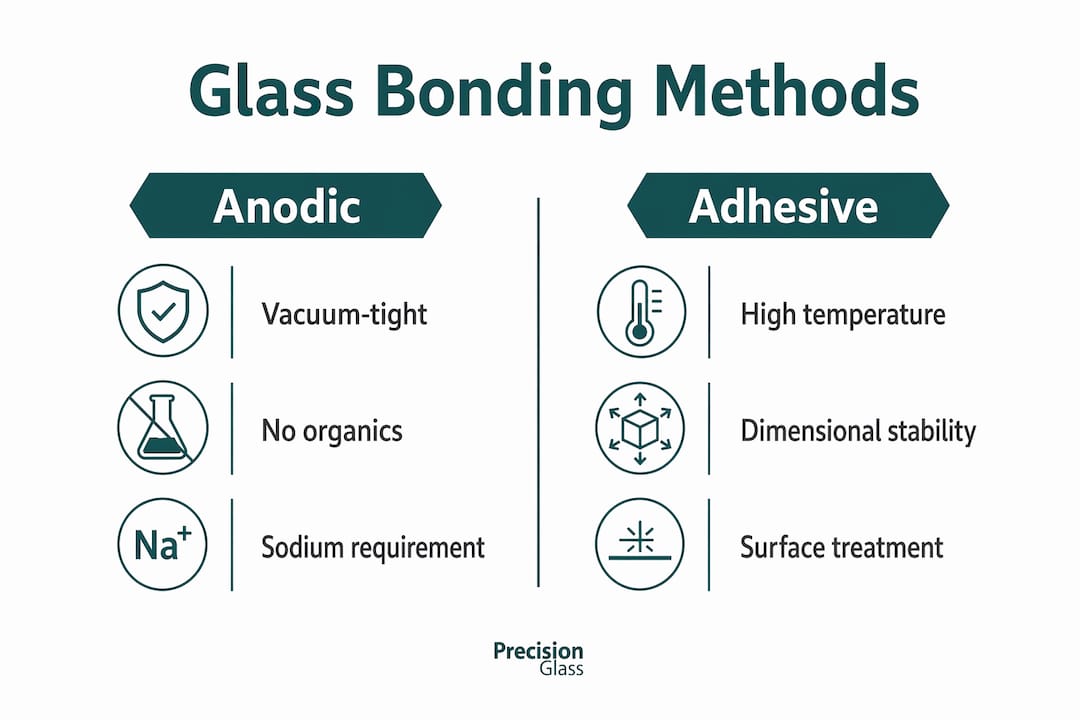
Anodic bonding joins sodium-rich glass wafers such as Pyrex 7740 to silicon by applying 400 to 1000 V at temperatures between 300 and 450 °C. The electric field drives sodium ions away from the interface, leaving a space-charge layer that pulls the glass into intimate contact with silicon and forms strong covalent Si–O–Si bonds. No adhesive or intermediate layer is required, which means organic contamination and outgassing are effectively eliminated. This makes anodic bonding the preferred route for MEMS pressure sensors and inertial measurement units where vacuum integrity is non-negotiable.
Glass frit bonding uses a screen-printed glass paste that melts and flows at 400 to 500 °C, forming hermetic seals over metal interconnects and surface topography that direct bonding cannot accommodate. Accelerometers and gyroscopes in automotive and aerospace inertial systems are routinely sealed this way in high-volume production. The trade-off is a wider bond ring, which limits miniaturisation, and the potential for residual outgassing from the frit material itself.
Adhesive bonding covers a broad range of glass adhesive technology, from UV-curable acrylates used in optical assemblies to ultra-high-temperature epoxies for precision optics. Silane coupling agents such as GPTMS (3-glycidoxypropyltrimethoxysilane) are applied to quartz or fused silica surfaces before epoxy application to improve molecular bonding and moisture durability. Moderate-modulus adhesives in the 1 to 5 GPa range, combined with bondline thicknesses of 0.5 to 0.8 mm, are specified to accommodate thermal expansion mismatches between glass and metal housings.
Glass thermal reflow heats glass to approximately 820 °C so it flows into micro-patterned silicon moulds, creating high-aspect-ratio microstructures after roughly 30 minutes of reflow followed by annealing and polishing. The technique is central to microfluidic chip fabrication and neural probe manufacturing. Cavity geometry matters: section filling ratios vary nonlinearly with cavity width, and voids become increasingly difficult to eliminate beyond optimal feature dimensions.
Pro Tip: Before specifying anodic bonding, confirm that your glass substrate contains sufficient sodium content. Borofloat 33 and Pyrex 7740 are reliable choices; low-alkali glasses such as fused silica will not bond anodically without a sodium-doped interlayer.
What are the technical advantages and challenges of each bonding method?
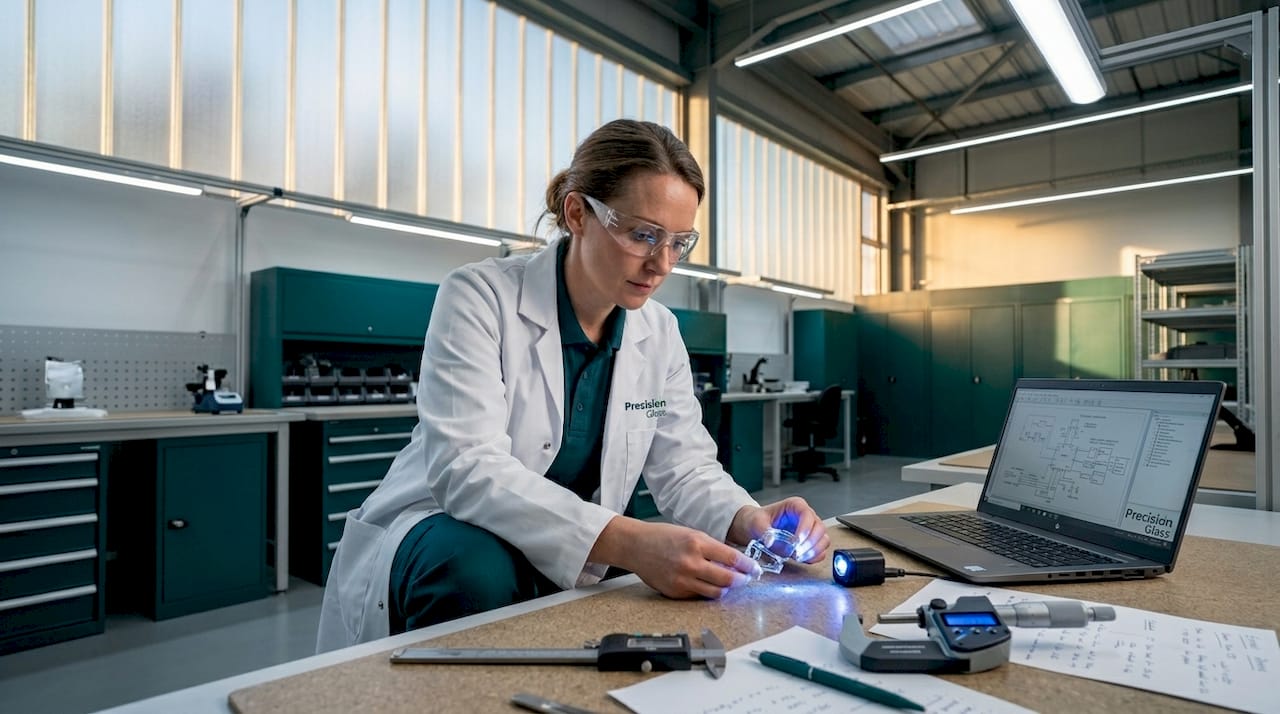
Choosing between bonding techniques requires weighing performance against process constraints. The table below summarises the critical trade-offs engineers encounter in practice.
| Method | Key advantages | Primary constraints |
|---|---|---|
| Anodic bonding | No organic layers; vacuum-tight; low outgassing; strong covalent interface | Requires sodium-rich glass; high voltage and temperature; limited to flat substrates |
| Glass frit bonding | Bonds over topography and metal lines; hermetic seal; high-volume compatible | Wider bond rings; potential frit outgassing; size limits miniaturisation |
| Adhesive bonding (epoxy/UV) | Flexible geometry; room-temperature options; optical clarity achievable | Cure-induced stress; thermal expansion mismatch; outgassing risk in vacuum |
| Glass thermal reflow | Complex 3D microstructures; excellent surface quality; integrates with silicon | High process temperature; nonlinear fill ratios; requires polishing post-reflow |
Anodic bonding is preferred for MEMS applications precisely because eliminating organic intermediate layers improves vacuum stability and reduces outgassing to levels compatible with inertial sensor performance specifications. This is not a marginal benefit; a single contaminated interface in a sealed MEMS cavity can shift resonant frequency by measurable amounts over the device lifetime.
Ultra-high-temperature epoxy adhesives maintain dimensional stability at service temperatures up to 250 °C, which is the threshold required for precision optical assemblies in airborne surveillance systems and directed-energy platforms. The risk with these adhesives is cure-induced stress. Rigid adhesives with high modulus can generate tensile stress fracture in the glass substrate even when the adhesive bond itself remains intact. This is why maximum bond strength is not always the correct design target; stress accommodation in the bondline is frequently more important than peak lap-shear values.
Pro Tip: When bonding quartz or fused silica components, heat the polished surface to around 150 °C before applying silane treatment. Heating reduces silanol density on the surface, but a controlled silane application step restores the bonding sites that molecular adhesion depends on.
How is glass bonding technology applied in aerospace, medical devices, and electronics?
The applications of glass bonding span three sectors with markedly different performance demands, yet all three share a common requirement: the bond must not degrade under the operational stresses the assembly will face across its service life.
Aerospace and defence
- Inertial measurement units and pressure sensors use anodic bonding to achieve vacuum-tight cavities with no organic contamination. Adhesives used in optical windows and sensor housings must meet ASTM E595 standards for total mass loss below 1% and collected volatile condensable materials below 0.1%. These limits are measured under thermal-vacuum conditions, not at room temperature, because outgassing behaviour changes significantly under operational environments.
- Precision optical mounts in surveillance and space instruments rely on ultra-high-temperature epoxies to maintain alignment under thermal cycling from cryogenic temperatures to above 150 °C. The glass solutions for aerospace sector demands both mechanical integrity and optical transmission stability across this range.
Medical devices
- Microfluidic diagnostic chips and lab-on-chip platforms use glass thermal reflow to create enclosed channels with submicron surface roughness. Double reflow processes produce micropipettes with submicron pores that achieve gigaseal resistances above 2 GΩ, which is the threshold required for patch-clamp electrophysiology in neural interfacing research.
- Implantable and surgical optical components require adhesives that are biocompatible, sterilisation-resistant, and optically clear. UV-curable adhesives are specified here because they cure on demand, minimising the thermal load on temperature-sensitive substrates.
Electronics and display manufacturing
- Optically clear adhesives divide into two categories: OCA (optically clear adhesive film) and LOCA (liquid optically clear adhesive). OCA and LOCA serve different geometries. OCA provides consistent bondline thickness for flat display interfaces; LOCA adapts to curved or uneven surfaces through UV-curing, making it the choice for flexible display bonding in consumer electronics and electronics manufacturing.
- Semiconductor wafer-level packaging uses glass frit bonding to hermetically seal MEMS dies at wafer scale, enabling the high-volume production rates that consumer inertial sensors demand.
What engineering best practices improve glass bonding outcomes?
Process discipline separates reliable bonded assemblies from those that fail during qualification testing. The following practices reflect the technical requirements that precision glass bonding demands.
- Surface preparation is non-negotiable. Polished glass surfaces must be cleaned to remove particulate contamination, organic residues, and moisture films before any bonding step. For adhesive bonding of quartz or fused silica, silane coupling treatment restores bonding sites that polishing and handling degrade. The glass component design process must specify surface preparation as a controlled step, not an assumption.
- Cure schedules must be staged. Rapid temperature ramps during adhesive cure generate thermal gradients across the bondline that produce residual stress. Careful control of cure schedules and temperature gradients is critical to avoid fracture in ceramic and glass optical assemblies. A staged ramp of 2 to 5 °C per minute with isothermal holds at intermediate temperatures is standard practice for high-temperature epoxy systems.
- Adhesive modulus must match the joint design. For quartz-to-metal assemblies, the coefficient of thermal expansion mismatch between fused silica (0.55 ppm/°C) and stainless steel (17 ppm/°C) is substantial. Specifying a moderate-modulus adhesive with an appropriate bondline thickness distributes the resulting stress over a larger area and prevents brittle fracture at the glass interface.
- Outgassing qualification must use thermal-vacuum conditions. Room-temperature outgassing measurements do not predict in-service behaviour. Volatile condensable materials must be measured under thermal-vacuum conditions to confirm compliance with NASA or ESA low-outgassing standards before the adhesive is approved for flight or optical instrument use.
- Contamination control extends to tooling and fixturing. Adhesive squeeze-out, particulate from fixturing, and solvent residues from cleaning all compromise bond quality. Cleanroom assembly at ISO Class 7 or better is the baseline for aerospace and medical optical bonding.
Pro Tip: When designing bond joints for thermal cycling applications, model the stress distribution using finite element analysis before committing to a bondline geometry. A 0.1 mm change in bondline thickness can shift peak stress by 30% or more in quartz-to-metal joints.
Key takeaways
Glass bonding technology requires matching the bonding method to the substrate chemistry, thermal environment, and outgassing requirements of the target application.
| Point | Details |
|---|---|
| Method selection drives performance | Anodic bonding suits vacuum MEMS; frit bonding suits topography; adhesives suit optical assemblies. |
| Stress accommodation over peak strength | Moderate-modulus adhesives with controlled bondline thickness prevent brittle fracture in low-CTE glass. |
| Surface preparation is a process step | Silane coupling treatment on quartz and fused silica restores molecular bonding sites before adhesive application. |
| Outgassing qualification needs thermal-vacuum testing | Room-temperature measurements do not reflect in-service volatile condensable material behaviour. |
| Thermal reflow enables complex microstructures | Glass reflow at 820 °C into silicon moulds produces submicron-quality features for bioMEMS and microfluidics. |
Why the chemistry matters more than the catalogue
The most common mistake I see engineers make when specifying glass bonding processes is selecting an adhesive based on its headline lap-shear strength rather than its modulus and outgassing profile. A bond that survives a pull test at room temperature can still fail catastrophically after ten thermal cycles between minus 55 and plus 125 °C if the modulus is too high for the substrate combination.
The emerging integration of glass thermal reflow with laser-assisted patterning and additive manufacturing is genuinely expanding what is achievable in microfluidic and neural interface fabrication. However, scaling these precision techniques to production volumes remains a real engineering challenge. The process windows for thermal reflow are narrow, fill ratios behave nonlinearly with cavity geometry, and polishing requirements add cycle time that does not compress easily.
My view is that the field is moving towards hybrid bonding strategies: anodic or frit bonding for the hermetic seal, combined with low-modulus adhesive layers for optical component mounting within the same assembly. This approach separates the vacuum integrity function from the stress accommodation function, which is a cleaner design logic than asking a single adhesive to do both. Research into improved silane coupling agents and genuinely low-outgassing UV-curable systems is the area I watch most closely, because those advances will unlock adhesive bonding in applications that currently require anodic bonding by default.
The quality standards that govern precision glass manufacturing are tightening across aerospace and medical sectors. Engineers who understand the bonding chemistry, not just the product datasheet, will be the ones who design assemblies that pass qualification on the first attempt.
— Alexandra
How Glassprecision supports precision glass bonding projects
Glassprecision designs and fabricates custom glass components for engineers working in aerospace, medical devices, defence, and electronics. Our manufacturing capabilities cover the full range of precision glass fabrication processes, including components specified for low-outgassing adhesive bonding, anodic bonding preparation, and thermal reflow integration.
Whether you are developing a hermetically sealed MEMS sensor, a microfluidic diagnostic platform, or a precision optical mount, our team works with your design requirements from the outset to select materials and surface finishes that support your bonding process. Explore our sector-specific capabilities to see how we support critical applications across industries that demand exacting standards of optical clarity, dimensional accuracy, and long-term reliability.
FAQ
What is the difference between anodic and frit glass bonding?
Anodic bonding forms direct covalent Si–O–Si bonds between sodium-rich glass and silicon using voltage and heat, with no intermediate material. Glass frit bonding uses a glass paste that melts at 400 to 500 °C to seal over surface topography, making it suitable for assemblies with metal interconnects where direct bonding is not possible.
Which glass bonding method has the lowest outgassing?
Anodic bonding produces the lowest outgassing because it requires no organic adhesive or intermediate layer. For adhesive-bonded assemblies, materials must meet ASTM E595 standards with total mass loss below 1% and collected volatile condensable materials below 0.1%, measured under thermal-vacuum conditions.
How does glass bonding work in medical microfluidics?
Glass thermal reflow heats glass to approximately 820 °C so it flows into micro-patterned silicon moulds, producing enclosed microchannels with submicron surface quality. Double reflow processes achieve micropipette pores with gigaseal resistances above 2 GΩ, which are required for electrophysiology and neural interfacing applications.
What adhesive properties matter most for optical glass bonding?
Optical clarity, low outgassing, moderate modulus (1 to 5 GPa), and compatibility with silane surface treatment are the critical properties. High-modulus adhesives generate tensile stress in low-CTE substrates such as fused silica during thermal cycling, which causes fracture even when the adhesive bond itself remains intact.
Can glass be bonded to metal for aerospace applications?
Glass can be bonded to metal using ultra-high-temperature epoxy adhesives that maintain dimensional stability up to 250 °C. The coefficient of thermal expansion mismatch between fused silica and stainless steel requires a moderate-modulus adhesive with a bondline thickness of 0.5 to 0.8 mm to distribute stress and prevent brittle fracture at the glass interface.