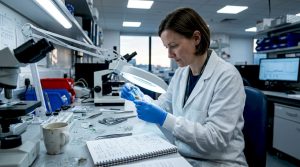
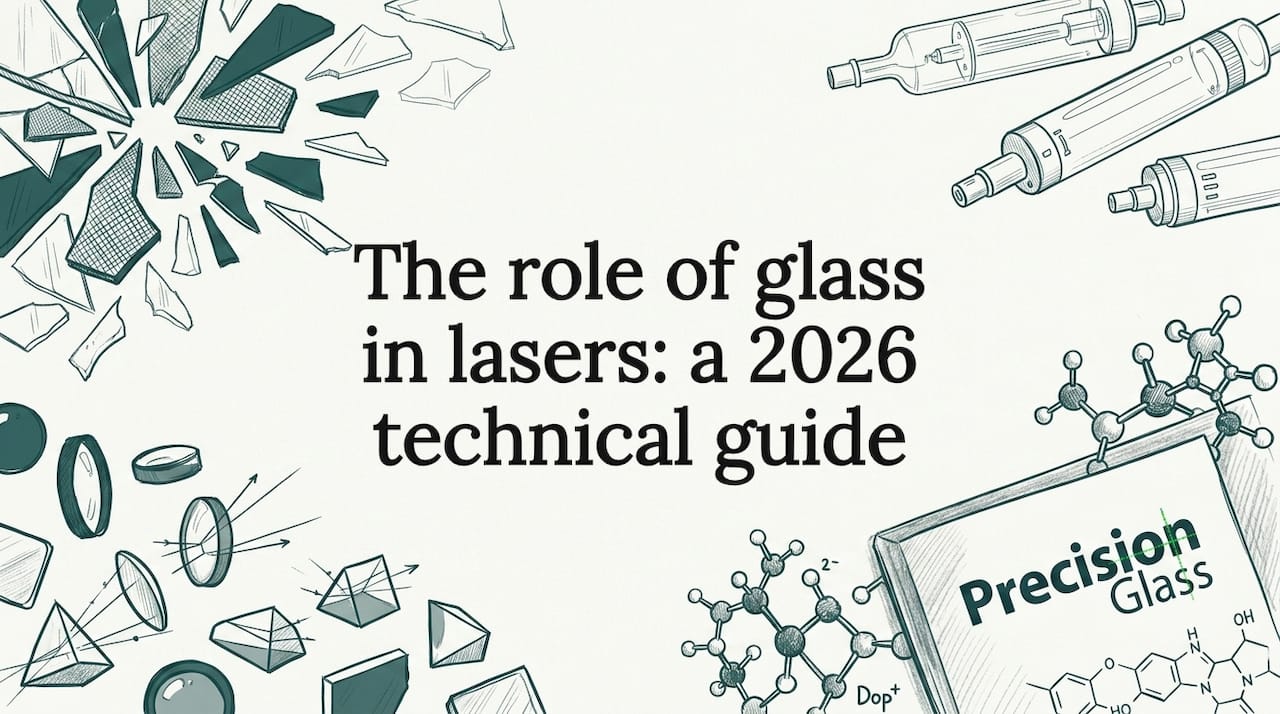
Glass is defined as the primary optical host and gain medium in laser systems, determining amplification efficiency, thermal stability, and damage resistance across applications from fusion energy to integrated photonics. The role of glass in lasers extends far beyond passive containment. When doped with rare-earth ions such as neodymium, erbium, or ytterbium, glass becomes an active amplifying material capable of sustaining high-energy laser transitions. The National Ignition Facility and Microsoft’s Silica project both demonstrate how glass composition and processing directly govern laser performance at the highest levels of engineering demand. Understanding these mechanisms is no longer optional for optics engineers. It is the foundation of every design decision in modern laser systems.
What materials and doping techniques distinguish laser glass from other optical materials?
Laser glass is distinguished from conventional optical glass by its deliberate chemical engineering to host rare-earth dopant ions in a stable, optically active matrix. The three principal glass matrix types used in laser applications are phosphate, silicate, and borosilicate, each offering a different balance of dopant solubility, thermal expansion, and spectroscopic performance.
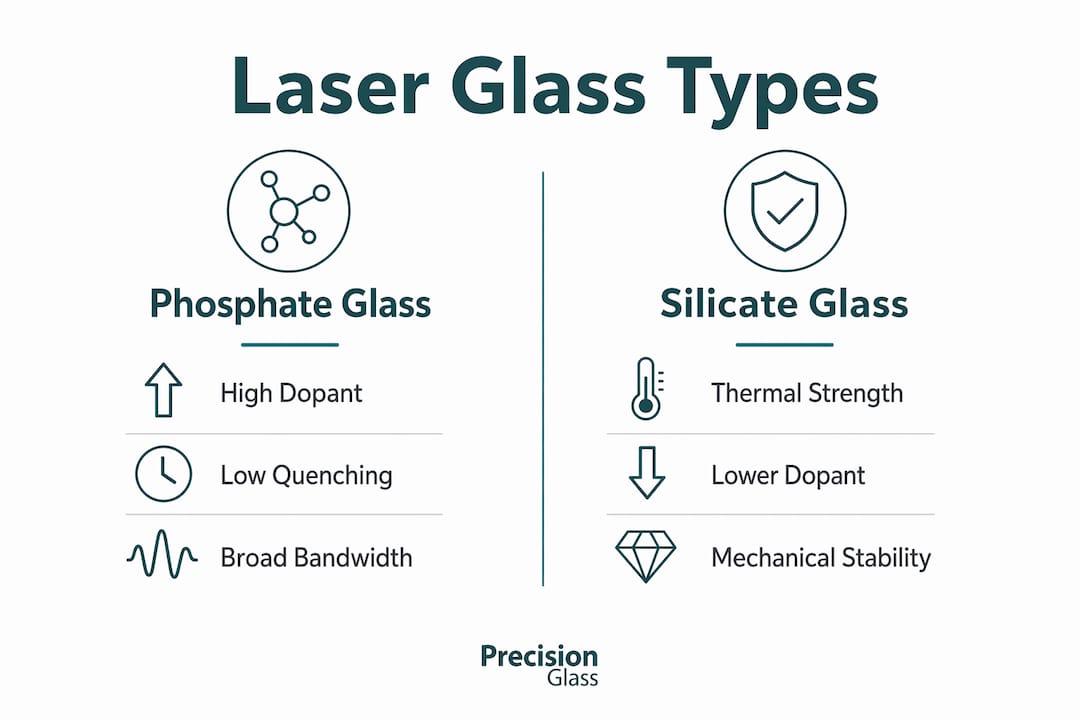
Phosphate glass is the preferred host for high-gain laser applications. Phosphate promotes homogeneous dopant distribution and reduces photoluminescence quenching, which is the primary mechanism limiting gain efficiency in densely doped media. This matters because quenching transfers energy between adjacent dopant ions rather than releasing it as stimulated emission, directly reducing laser output. Phosphate glass is thermally unstable on its own, requiring stabilisation with third cations such as aluminium to prevent phosphate evaporation during melting and to maintain the dopant environment through the manufacturing process.
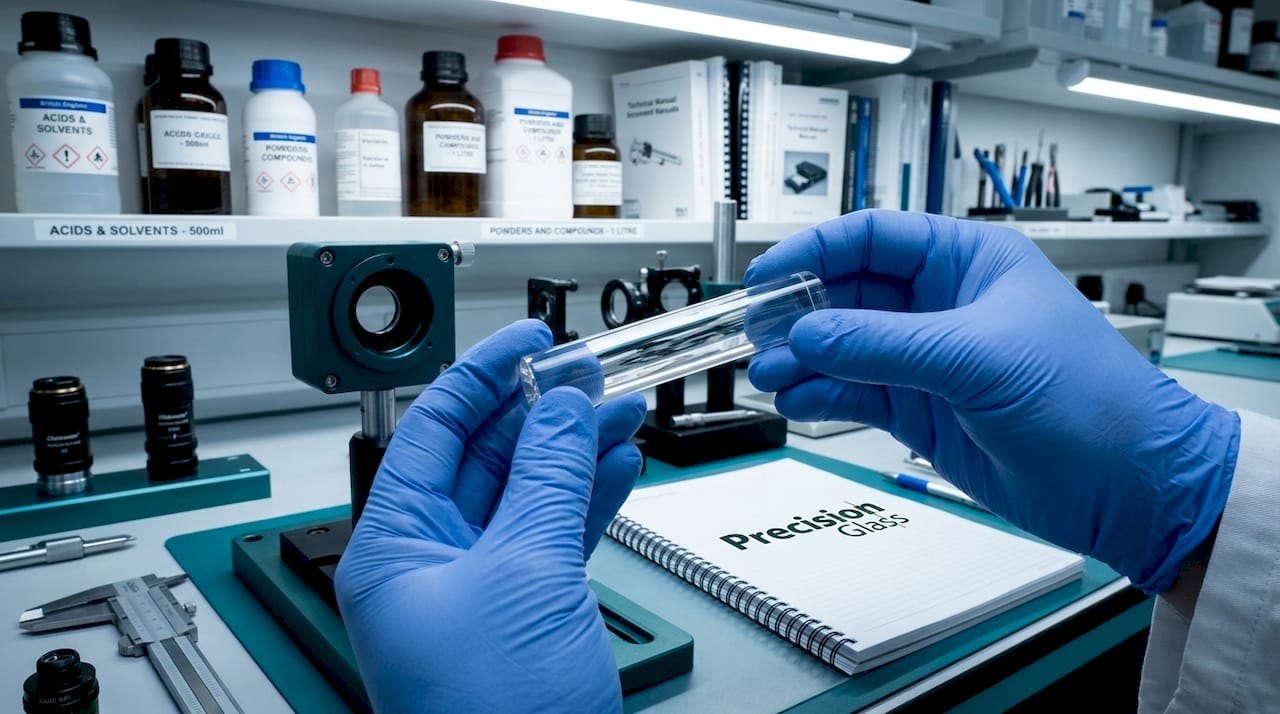
Silicate glass offers better thermal and mechanical properties than phosphate but provides lower dopant solubility and less favourable emission cross-sections for neodymium. Borosilicate glass, familiar from laboratory ware, is rarely used as a primary laser gain medium due to its limited rare-earth solubility, though it appears in supporting optical components within laser systems.
The dopant elements themselves carry distinct advantages. Neodymium (Nd³⁺) dominates high-power solid-state lasers due to its strong absorption bands and efficient emission near 1064 nm. Erbium (Er³⁺) and ytterbium (Yb³⁺) co-doping is the standard approach for telecommunications-band amplifiers operating near 1550 nm, where Yb³⁺ acts as a sensitiser transferring absorbed pump energy to Er³⁺ for emission. Understanding the optical properties of glass at this level of chemical specificity separates functional laser glass design from generic optical material selection.
Pro Tip: When specifying phosphate laser glass, always confirm the aluminium content in the composition sheet. Insufficient aluminium stabilisation leads to dopant clustering during annealing, which degrades gain uniformity across the slab and is difficult to detect without spatially resolved fluorescence mapping.
| Glass type | Key laser property |
|---|---|
| Phosphate | High dopant solubility, low quenching, preferred for gain media |
| Silicate | Better thermal stability, moderate dopant solubility |
| Borosilicate | Good mechanical properties, limited use as gain medium |
| Fused silica | Excellent transmission, primary substrate for waveguide writing |
How does glass influence laser amplification and durability in high-power systems?
Glass governs laser amplification through two mechanisms: the spectroscopic properties of the dopant-host interaction, and the physical integrity of the glass under high fluence. Both must be engineered simultaneously in any serious laser system.
The National Ignition Facility provides the most demanding demonstration of glass amplifier design in practice. It uses 3,072 neodymium-doped phosphate glass slabs to amplify laser pulses to approximately 4 million joules, with each slab weighing 42 kg. That scale of energy extraction is only achievable because the phosphate glass matrix distributes Nd³⁺ ions with sufficient uniformity to prevent localised gain saturation and thermal hotspots. The rare-earth valence electrons in these dopants carry high orbital angular momentum and are shielded by outer electron shells, which buffers laser transitions from thermal perturbations and environmental noise. This electronic shielding is why rare-earth-doped glass maintains consistent laser performance under the extreme conditions inside a fusion-class amplifier.
In integrated photonics, the performance metrics are different but equally demanding. Er³⁺/Yb³⁺ co-doped phosphate glass waveguide amplifiers fabricated by femtosecond laser direct writing achieve 10.31 dB net gain at 1550 nm with a propagation loss of 1.84 dB/cm over a 0.6 cm waveguide length under 350 mW pump power. That level of on-chip gain, without semiconductor active regions, confirms that glass is an active optical medium in integrated photonics rather than a passive substrate.
Key performance factors that glass composition and processing directly control include:
- Gain uniformity: determined by dopant distribution homogeneity across the glass volume
- Thermal load tolerance: governed by thermal conductivity and expansion coefficient of the glass matrix
- Damage threshold: set by surface and subsurface defect density, which polishing and etching processes reduce
- Emission bandwidth: controlled by the inhomogeneous broadening of the dopant transition within the glass host, which is wider in glass than in crystals
Glass hosts offer broader emission bandwidths than laser crystals such as Nd:YAG, making them preferable for ultrashort pulse amplification and tunable laser applications. The trade-off is lower thermal conductivity, which limits average power handling in continuous-wave configurations.
What are the mechanisms behind femtosecond laser writing in glass?
Femtosecond laser direct writing in glass is defined as the use of ultrashort pulses focused to terawatt-per-square-centimetre intensities inside a transparent glass volume to induce permanent structural modifications without bulk absorption. The process relies on nonlinear ionisation mechanisms, specifically multiphoton and avalanche ionisation, which generate a localised plasma that modifies the glass network on a sub-micrometre scale.
The physical basis is precise. Tight focusing delivers terawatt-per-cm² flux inside fused silica, creating three-dimensional microstructures without surface contact or bulk thermal damage outside the focal volume. This enables fabrication of waveguides, gratings, and optical circuits buried within the glass bulk, which is impossible with conventional lithographic or mechanical methods.
Parameter control in femtosecond writing follows a specific hierarchy:
- Numerical aperture (NA): sets the focal volume size and intensity distribution; higher NA produces tighter confinement and smaller modification zones
- Pulse duration: determines the ionisation regime; sub-100 fs pulses favour multiphoton ionisation with minimal thermal diffusion
- Repetition rate: controls heat accumulation; rates above approximately 1 MHz cause cumulative heating that can be exploited for smooth waveguide formation in some glass compositions
- Scan speed: governs the overlap between successive pulses and therefore the longitudinal uniformity of the written structure
Success in femtosecond laser microfabrication depends more on controlling focus geometry and pulse duration than on power scaling alone, because the underlying plasma and electron dynamics in the glass volume are highly sensitive to these parameters.
The archival data storage application illustrates the durability of femtosecond-modified glass. Microsoft’s Silica project uses femtosecond laser-modified voxels in fused silica for data storage exceeding 10,000 years at room temperature, with error-free retrieval at high density. The permanence of the structural modifications reflects the chemical stability of fused silica and the precision of the writing process. For photonic device designers, this durability translates directly to long-term reliability of written waveguide amplifiers in deployed systems.
Pro Tip: For waveguide amplifiers in Er/Yb-doped phosphate glass, optimise the writing NA before adjusting pulse energy. Increasing pulse energy to compensate for a poorly matched focal geometry typically introduces stress-induced birefringence that degrades polarisation-dependent gain performance.
How do glass finishing techniques affect laser damage thresholds?
Laser-induced damage threshold (LIDT) is defined as the maximum fluence a glass optical component can sustain before irreversible surface or bulk damage occurs. LIDT is not solely a material property. It is a combined function of glass composition, surface finish quality, and subsurface defect density introduced during grinding and polishing.
CO2 laser polishing increases the LIDT of fused silica from approximately 29.79 to 35.75 J/cm², a 20% improvement over conventionally polished surfaces. That gain comes from a specific physical mechanism: the CO2 laser melts a thin surface layer, allowing surface tension to drive micro-flow that fuses subsurface cracks and removes contamination sites. These sites are the principal initiators of laser damage, so eliminating them directly raises the threshold at which damage cascades begin.
The process sequence matters as much as the laser treatment itself. Pre-treatment cleaning and etching combined with controlled laser power levels optimise the LIDT improvement. Etching removes the mechanically damaged layer left by abrasive polishing, reducing the population of crack tips that the laser treatment must subsequently heal. Skipping the etch step leaves a residual defect population that limits the achievable LIDT regardless of laser polishing quality.
Practical implications for component specification and procurement include:
- Specify surface roughness and subsurface damage depth, not just transmitted wavefront error, when ordering laser-grade fused silica optics
- Require process validation data showing LIDT measurements after polishing, not just surface figure data
- For components operating above 20 J/cm², CO2 laser polishing should be a mandatory finishing step rather than an optional upgrade
- Damage density measurements across the aperture reveal polishing uniformity issues that single-point LIDT tests miss
The principle that LIDT improvement comes from defect mitigation rather than glass type switching has a direct procurement implication. Upgrading to a more expensive glass grade without improving the polishing process delivers marginal benefit. Process control and surface treatment are the primary levers for extending component life in high-fluence laser systems. Reviewing the precision glass manufacturing workflow for any supplier is therefore as important as reviewing the material specification sheet.
Key takeaways
Glass composition, rare-earth doping, and surface finishing collectively determine laser amplification efficiency, damage resistance, and long-term reliability in every class of laser system from fusion amplifiers to integrated photonic devices.
| Point | Details |
|---|---|
| Phosphate glass as gain medium | Phosphate promotes uniform dopant distribution and reduces quenching, making it the preferred matrix for high-gain laser applications. |
| Rare-earth electronic shielding | Shielded valence electrons in Nd³⁺, Er³⁺, and Yb³⁺ buffer laser transitions from thermal noise, sustaining performance under high-power conditions. |
| Femtosecond writing enables on-chip gain | Er/Yb-doped phosphate glass waveguides written by femtosecond laser achieve 10.31 dB net gain at 1550 nm, replacing semiconductor amplifiers in photonic circuits. |
| CO2 polishing raises LIDT by 20% | Laser polishing removes subsurface defects that initiate damage, lifting fused silica LIDT from 29.79 to 35.75 J/cm². |
| Process control equals material selection | Defect mitigation through polishing and etching delivers greater LIDT gains than switching glass grades without improving the finishing process. |
Why glass chemistry deserves more attention than laser engineers typically give it
Most laser system designers I have worked with treat glass selection as a procurement decision rather than a design decision. They specify fused silica or Nd-doped phosphate glass by catalogue number, accept the manufacturer’s LIDT figure, and move on to cavity design. That approach works until it doesn’t, and when it fails, the failure mode is almost always traced back to something in the glass chemistry or finishing process that was never interrogated.
The phosphate stabilisation issue is a good example. The requirement to balance phosphate content against aluminium addition to prevent dopant clustering during annealing is not prominently featured in most glass datasheets. Yet it directly governs gain uniformity across a large slab. At the NIF scale, non-uniform gain across 3,072 slabs compounds into measurable energy extraction losses. At the waveguide amplifier scale, dopant clustering produces localised quenching that limits the achievable net gain regardless of pump power.
The femtosecond writing parameter hierarchy is equally underappreciated. Researchers routinely increase pulse energy when a written waveguide shows poor guiding, when the correct response is to revisit the NA and pulse duration first. The plasma dynamics inside the glass volume are not linear with pulse energy, and stress-induced modifications from over-driven pulses are difficult to anneal out without degrading the surrounding glass structure.
My view is that the most productive area for near-term progress in laser glass performance is the integration of spatially resolved characterisation, specifically fluorescence lifetime mapping and photothermal common-path interferometry, into the manufacturing quality assurance process rather than leaving it to post-fabrication testing. Catching dopant clustering and subsurface defect distributions before a component enters a laser system saves far more than it costs. The material science and the laser engineering communities need to share that quality assurance language more fluently than they currently do.
— Alexandra
Precision glass solutions for laser and optical applications
Engineers specifying glass components for laser systems require more than standard optical tolerances. They need verified dopant compatibility, controlled surface finishing, and documented LIDT performance.

Glassprecision supplies precision-engineered glass components tailored for demanding optical and laser applications across defence, aerospace, and photonics. The manufacturing process covers melting, grinding, polishing, and quality assurance to exacting specifications, with each component traceable through the full production sequence. Explore the technical glass product range for components suited to high-fluence laser environments, or review the optical components catalogue for laser system designers requiring verified optical-grade glass with full process documentation.
FAQ
What is the role of glass in lasers?
Glass serves as both the optical host and the gain medium in laser systems. When doped with rare-earth ions such as neodymium or erbium, it amplifies laser light through stimulated emission and determines key performance parameters including gain, bandwidth, and damage resistance.
Why is phosphate glass preferred for laser gain media?
Phosphate glass promotes homogeneous distribution of rare-earth dopant ions and reduces photoluminescence quenching, which directly improves gain efficiency. It requires aluminium stabilisation during manufacturing to prevent dopant clustering and phosphate evaporation.
How does femtosecond laser writing use glass properties?
Femtosecond laser writing exploits the transparency of fused silica to deliver focused ultrashort pulses that induce localised structural modifications inside the glass bulk. This enables fabrication of buried waveguides and photonic circuits without surface contact or bulk thermal damage.
What determines the laser-induced damage threshold of optical glass?
LIDT is governed by surface and subsurface defect density rather than bulk glass composition alone. CO2 laser polishing combined with pre-treatment etching removes crack initiators and raises fused silica LIDT by approximately 20% compared to conventionally polished surfaces.
Can glass replace semiconductors in photonic amplifiers?
Er³⁺/Yb³⁺ co-doped phosphate glass waveguide amplifiers fabricated by femtosecond laser writing achieve 10.31 dB net gain at 1550 nm, covering the full C-band. This demonstrates that doped glass is a viable active medium for on-chip amplification without semiconductor active regions.