Finding a precision glass supplier that offers traceable certification, tight tolerances, and rapid turnaround for regulated industrial applications remains challenging. Many established vendors lack end to end process control, in house certification, or quick delivery, forcing buyers into fragmented procurement and slower qualification cycles. This comparison clarifies core differences in certification, manufacturing capabilities, and lead times so you can select a supplier suited to your engineering and compliance requirements.
Table of contents
Glassprecision
At a glance
The company states it documents and certifies every aspect of its manufacturing process. That level of traceability supports parts used in safety critical sectors such as aerospace and medical devices. Glassprecision handles work from prototype runs to high volume production while maintaining tight tolerances and on-time delivery. Their capabilities include melting, grinding, polishing, toughening, CNC machining, coating, and lamination.
Core features
Custom glass components for prototypes and mass production with specification-driven workflows. These are aimed at industrial applications rather than consumer goods.
In-house finishing covering grinding, polishing, toughening, coating, and lamination to keep process control under one roof.
Advanced CNC machining for complex geometries and tight tolerances that typical subcontracting struggles to match.
Quality control and certification geared to aerospace and medical standards, with documentation to support regulatory submissions.
Global supply chain and delivery focus to meet scheduled production windows for industrial clients.
Key differentiator
Glassprecision keeps nearly all fabrication steps in-house and offers documented process certification for regulated sectors. That combination reduces handoffs between suppliers and preserves dimensional and surface specifications. The result is fewer qualification gaps when a customer moves from prototype to production at scale.
Pros
Decades of experience in precision glass manufacturing. This background helps when projects demand unusual glass types or low-impurity melts.
Highly customisable solutions from design to finished product. You can specify coatings, surface treatments, and exact tolerances in early design reviews.
Support for complex geometries and advanced surface treatments through integrated CNC machining and finishing operations. This reduces the need to break work into multiple vendors.
Strong emphasis on quality control with certification for aerospace and medical applications. That documentation helps with regulatory and defence procurement requirements.
Global reach with reliable logistics and on-time delivery practices. This matters for programmes that must align glass deliveries to assembly schedules.
Cons
- Premium pricing reflects the certification and in-house capabilities. Expect higher unit costs for small batches or single prototypes compared with commodity glass suppliers.
Who it’s for
Engineers and procurement professionals in aerospace, medical devices, automotive, and high-tech optics who need certified, reliable glass parts. Teams that must prove traceability and meet tight mechanical or optical specifications will find this model suited to their projects. It is not aimed at low-cost consumer product runs.
Unique value proposition
In-house end-to-end production from melting through lamination gives a single accountable supplier for qualified parts. That single-supplier model shortens qualification loops and preserves traceability across coatings and CNC work. For programmes that require documented process control, this reduces administrative friction when submitting parts for certification or contract review.
Real world use case
A medical device developer worked with Glassprecision to specify ultra-clean glass for sterilisation-resistant optics. The supplier used CNC machining and tailored coatings during prototyping, then scaled to volume production while providing full process documentation. That workflow supported the developer’s regulatory filings and device validation.
Pricing
Cost depends on complexity and volume rather than fixed catalogue pricing. Projects commonly include custom machining, coating, and certification fees, with bulk orders eligible for quoted discounts. Standard samples and prototypes are priced to project specifications and reviewed during initial design discussions.
Website: https://glassprecision.com
IRD glass
At a glance
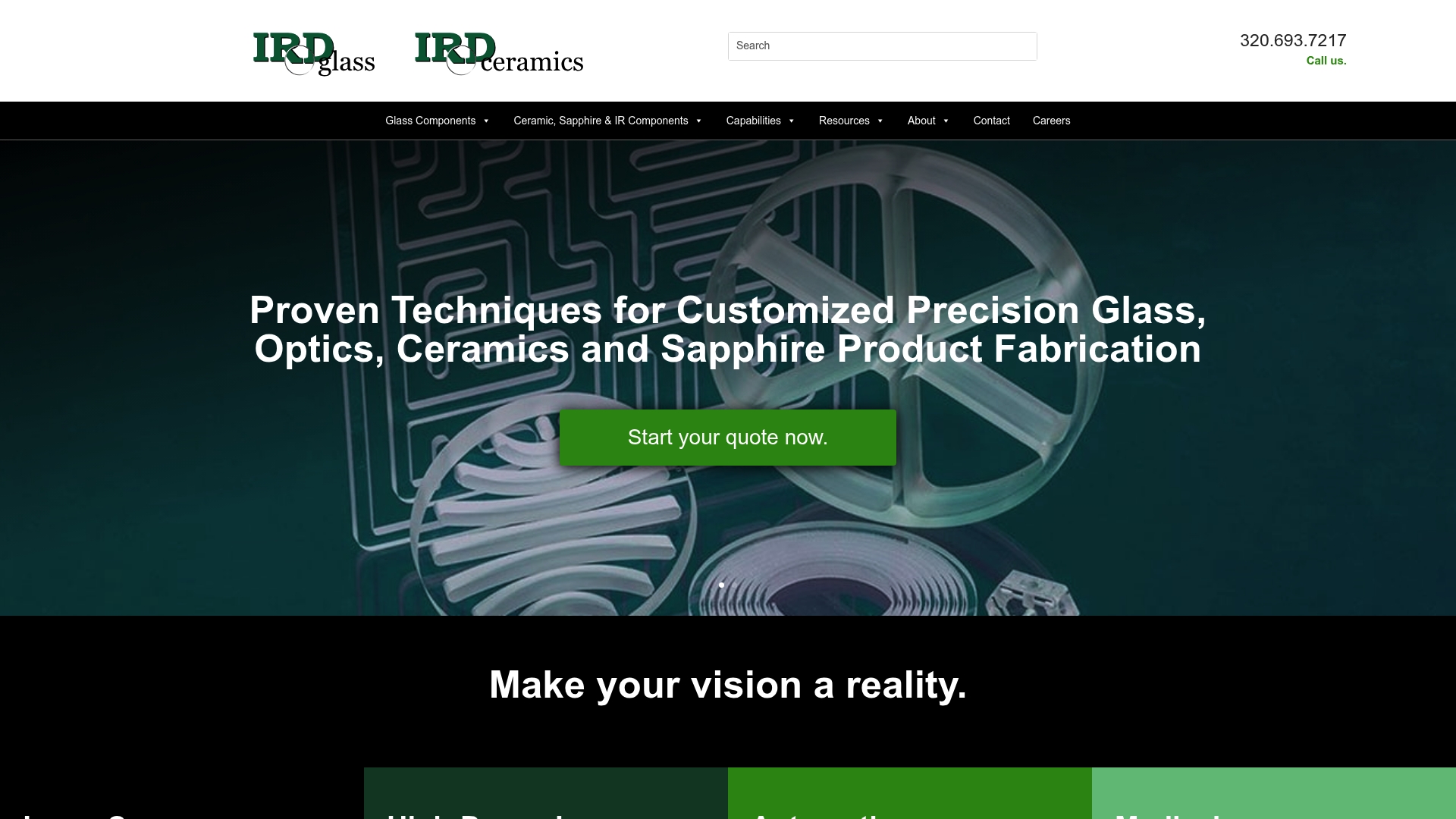
Custom sapphire windows and IR components feature prominently in IRD Glass’s product range for medical and aerospace customers. The company offers machining, polishing, coating, and assembly all under one roof to support projects from prototype to full production. That end to end capability suits businesses with tight tolerances and bespoke requirements.
Core features
IRD Glass concentrates on high precision optical and ceramic component manufacture. Key capabilities include:
- Custom fabrication and polishing of optical and ceramic components, including flat and cylindrical optics and prisms.
- Coating, machining, and assembly performed in house to reduce handoffs and keep tolerance control local.
- The vendor states it holds ISO 9001:2015 certification for its quality management system.
- Production support that spans prototypes through mass production, serving aerospace, medical, defence, laser, and industrial markets.
These features reflect a production line organised for technical parts rather than commodity glass.
Key differentiator
IRD Glass emphasises consolidated manufacturing under a single roof. That approach reduces external subcontracting and preserves dimensional and surface quality through successive process steps. For OEMs that need matched coatings, machining, and optical polishing on a single part, this one supplier workflow lowers risk and simplifies technical communication.
Pros
Strong expertise in optical and ceramic components. The team handles complex materials such as sapphire and IR substrates with appropriate finishing processes.
Broad in house process set. Coating, machining, polishing, and assembly under one management chain minimise cross vendor tolerance losses.
Clear focus on high tolerance work for demanding sectors. Aerospace and medical clients will find the offer aligned with their part specification needs.
ISO 9001:2015 certification present. The company advertises this as a framework for consistent quality management.
Capable of taking projects from prototype to production. That continuity speeds design iteration and keeps production intent intact.
Cons
Primarily serves specialised, high precision markets. The offering is not cost competitive for casual or low cost applications.
Limited public information on standard lead times and price points. Buyers must contact sales for detailed schedules and quotes.
Business to business and OEM focus may not suit individual purchasers or very small runs that need off the shelf parts.
When it may not fit
If you need off the shelf optics with immediate availability, this supplier is a poor match. The company provides a limited online catalogue and relies on direct engineering dialogue and custom quotes. Buyers seeking fixed retail pricing or short run consumer volumes should look elsewhere.
Who it’s for
This product targets OEMs and procurement teams in high tech manufacturing that need custom, high tolerance optical and ceramic parts. Engineers developing medical imaging, laser systems, or aerospace sighting components will benefit from the combined fabrication and coating capabilities. Procurement managers who require supplier traceability and documented quality processes will also find it relevant.
Real world use case
According to the company, a medical device manufacturer worked with IRD Glass to develop custom sapphire windows for new imaging equipment. The client submitted a prototype request and refined design parameters with IRD’s engineers. Production then scaled while maintaining the surface and dimensional tolerances required for the application.
Pricing
Pricing is by specification and quotation only. The vendor provides custom quotes based on material, tolerances, coatings, and production volume. Expect to engage engineering early to obtain an accurate price and lead time for bespoke parts.
Website: https://irdglass.com
Abrisa technologies
At a glance
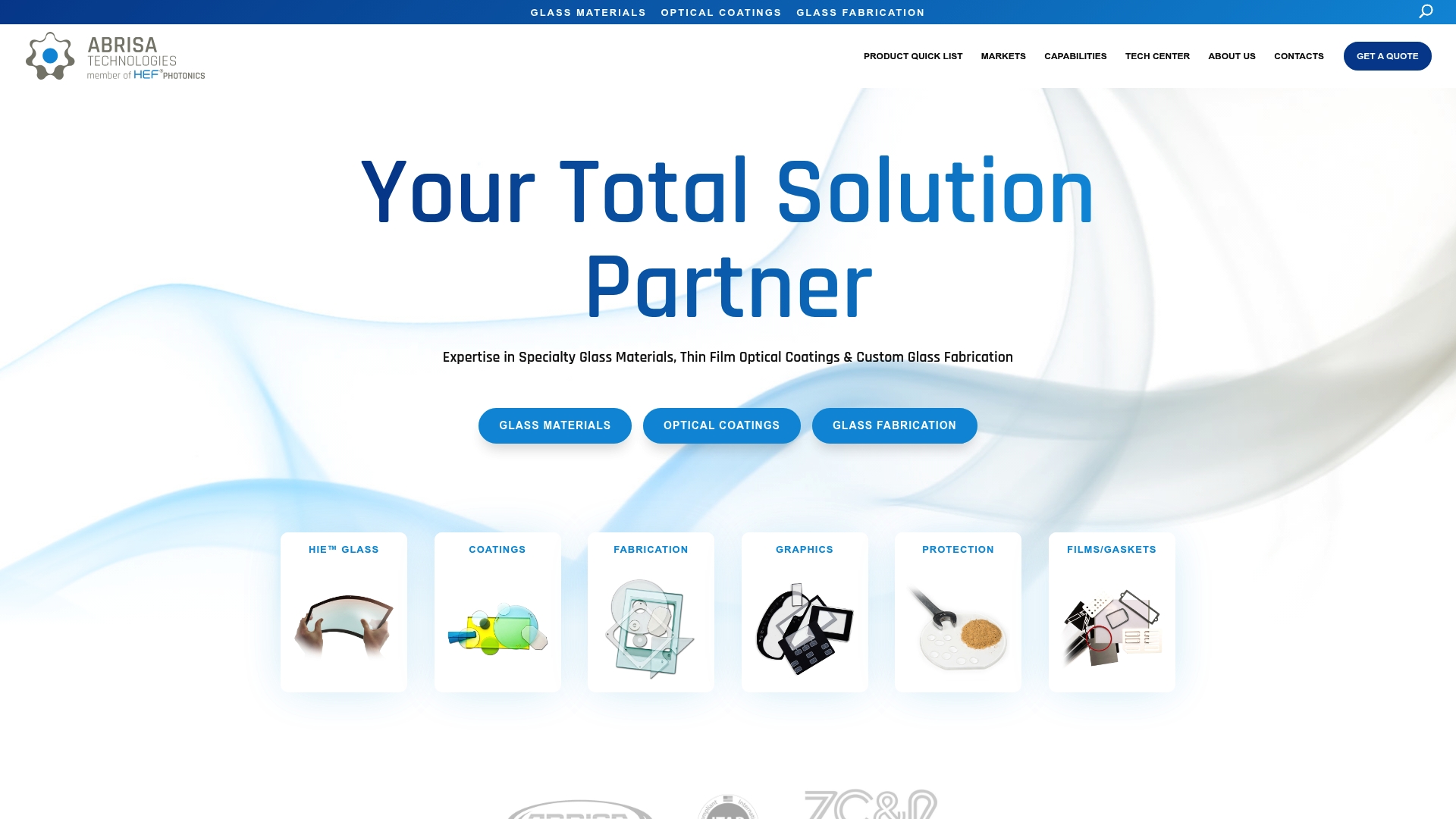
Operating for over 80 years, Abrisa Technologies combines glass manufacture and optical coating under a single production roof. That long tenure supports projects from wafer sized substrates to large format optical glass. The firm targets defence, aerospace, medical, microelectronics, and display industries with specialised materials and coatings.
Core features
Abrisa supplies a wide portfolio of specialty glasses and coatings, including antireflective, anti fingerprint, heat resistant, UV transmitting, and impact resistant options. They offer custom glass fabrication across wafer sized parts up to large structural components. The company provides in house R&D and application support via a technical centre. Vertical integration of glass making, coating, and fabrication reduces handoffs and shortens lead times.
Key differentiator
The primary difference is full vertical integration of fabrication and coatings within one supply chain. That arrangement lets Abrisa tailor substrate chemistry, thickness, and coating stacks together rather than matching separate suppliers. For buyers who need matched material and coating specifications, this reduces iteration and risk on critical optical or structural parameters.
Pros
Long industry history. Eight decades of experience provide depth in material know how and processing methods.
Broad specialty portfolio. Multiple glass chemistries and coating types let you pick substrate and finish to meet optical, thermal, and impact requirements.
Integrated production. Manufacturing, coating, and finishing under one roof speeds engineering feedback and shortens development cycles.
Quality credentials. The vendor reports ISO certifications that support regulated and defence contract requirements.
Strong R&D support. Technical staff and lab resources help with material selection, prototyping, and application testing.
Cons
Premium cost profile. Pricing reflects specialised materials and end to end processing, so unit cost is higher than commodity glass.
Industrial focus. Service model and minimum orders suit R&D labs and manufacturers rather than hobbyists or small artisans.
Limited retail presence. Sales operate through B2B channels, which reduces direct consumer access and off the shelf purchases.
When it may not fit
If your project is low volume and price sensitive, Abrisa will likely be too costly. For single unit hobby projects or consumer craft work, their minimums and technical sales process will add time and overhead. Organisations seeking off the shelf retail glass will find the offering geared to engineered, not consumer, supply.
Who it’s for
Researchers, engineers, and procurement managers in aerospace, defence, medical, microelectronics, and advanced display sectors will get most value. Teams that require matched substrate and coating specifications, documented quality systems, and engineering support will benefit. The product fits those who plan prototype to production with technical collaboration.
Real world use case
A semiconductor manufacturer worked with Abrisa to develop transparent conductive coatings on ultra thin borosilicate substrates for advanced displays. Abrisa handled material selection, fabrication, coating application, and quality checks in house. That single supplier model shortened the prototype cycle and cut coordination between multiple vendors.
Pricing
Abrisa offers custom quotes based on project specifications. Pricing generally sits at a premium level in keeping with advanced materials, matched coatings, and small batch processing. You will need to request specification details and volumes to obtain an accurate estimate.
Website: https://abrisatechnologies.com
Precision glass & optics
At a glance
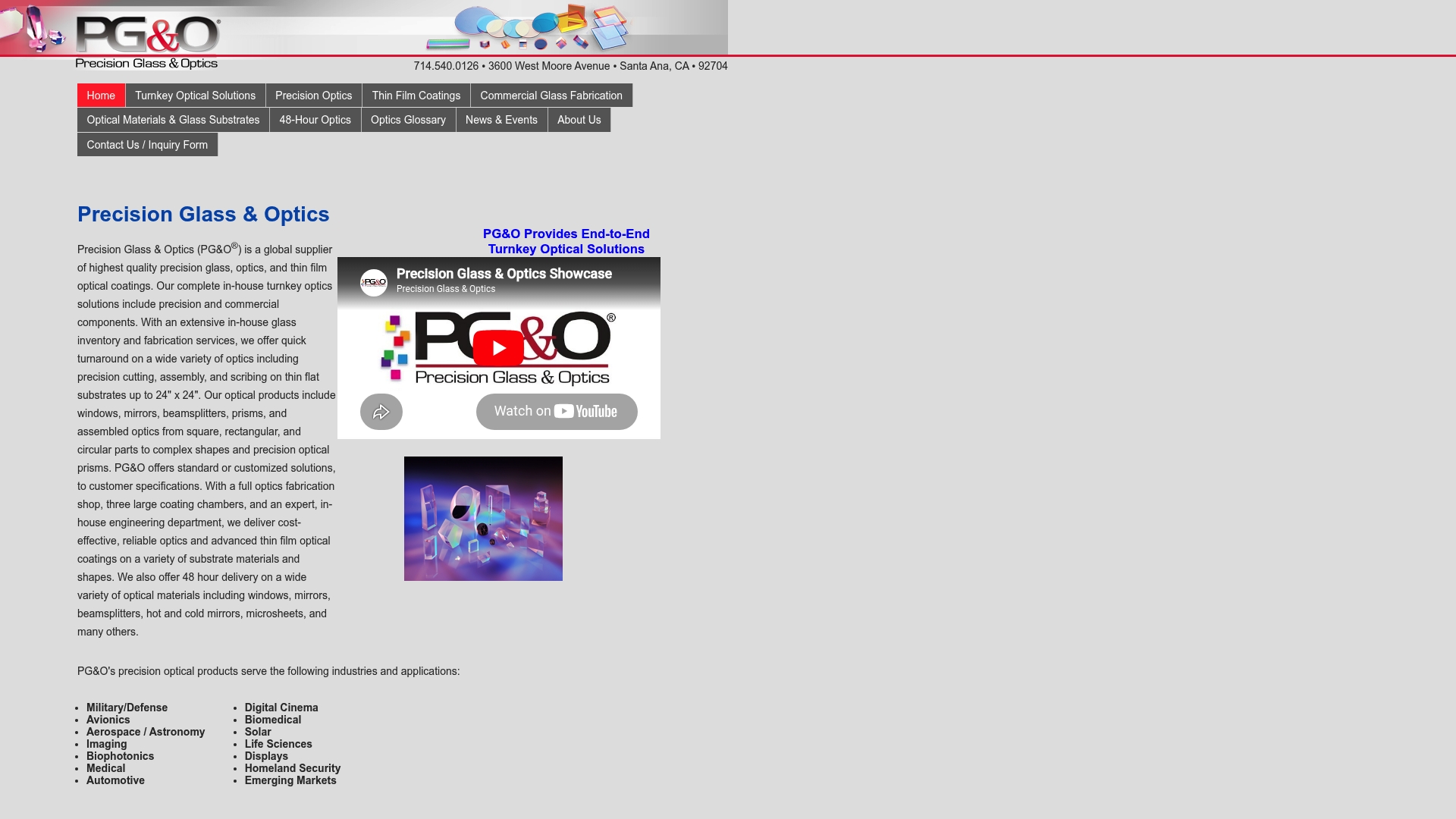
PG&O reports delivery within 48 hours on many standard optical products. The company advertises in-house fabrication that covers precision cutting, polishing, assembly, and high speed thin film depositions. The vendor also states compliance with ISO 9002 and MIL-PRF-13830B. That combination targets time-sensitive defence and aerospace projects that need finished optics quickly.
Core features
In-house manufacturing and inventory. Stocked optical substrates and on-site fabrication reduce handoffs and simplify procurement.
Rapid fulfilment. The marketing materials claim delivery within 48 hours on many standard items, useful for emergency spares and fast prototyping.
Custom coating and fabrication. Thin film depositions and bespoke coatings for non-standard shapes and assemblies.
Technical documentation and engineering support. A comprehensive optical glossary and documentation complement custom engineering work.
Key differentiator
What distinguishes PG&O is its combination of on-site production and the claim of fast delivery. Owning fabrication and coating processes keeps control of lead times and quality. That focus suits buyers who must reduce supplier handoffs and compress procurement cycles.
Pros
In-house manufacturing ensures tighter quality control and fewer external dependencies. This reduces rework and shortens timelines for complex assemblies.
Broad product range from substrates to finished coated optics speeds single-vendor sourcing for assemblies. That reduces the number of purchase orders and technical handovers.
PG&O’s marketing materials state more than 35 years of operation since 1985. That history suggests mature processes and long-term supplier relationships.
Compliance with the standards named above supports procurement for military and aerospace specifications. Those standards simplify qualification for regulated projects.
The ability to handle complex shapes and coatings suits optical engineers working on bespoke laser, imaging, and biomedical systems.
Cons
The company primarily lists US operations and provides few details on international shipping. Buyers outside the US should expect longer logistics times.
Public pricing is absent. Custom services and high quality imply premium pricing and require quotes for budgeting.
Minimum order requirements for some custom items may disadvantage small prototype runs. Small teams may face higher per unit costs.
When it may not fit
If your programme requires EU or Asia based inventory with predictable cross border lead times, this supplier may add shipping complexity. If you need transparent list pricing for quick budget approvals, the quote on request model will slow procurement. Small-volume buyers may find minimums and bespoke charges outweigh the manufacturing benefits.
Who it’s for
Engineers and procurement specialists in aerospace, defence, biomedical, and scientific research will find PG&O relevant. The ideal user specifies detailed optical tolerances and coatings. Teams that value fast turnarounds and single‑vendor sourcing for optics will benefit most.
Real world use case
A systems engineer at a defence contractor specified custom mirrors and optical assemblies for a laser system. PG&O consulted on coatings and tolerances, fabricated the parts, and shipped them within the claimed 48 hours. That delivery kept the project on its development schedule.
Pricing
Pricing is quote based and varies with size, shape, and coating complexity. Standard substrates and coatings are described as competitively priced but still custom engineered. Bulk orders may qualify for discounts, while single prototype pieces will need individual quotes.
Website: https://pgo.com
Precision glass and optics alternatives
Below is a comparison of providers specialising in custom precision glass components, highlighting features, differentiators, and suitable applications.
| Product Name | Key Differentiator | Best For | Pricing | Notable Limitation |
|---|---|---|---|---|
| Precision Glasses | In-house fabrication with certification | Aerospace and Medical projects | Not disclosed | Premium pricing for small or prototype batches |
| IRD Glass | Single-venue optical and ceramic works | Medical imaging and high-tech engineering | Not disclosed | Unsuitable for low-cost or casual applications |
| Abrisa Technologies | Fully integrated coating and fabrication | Advanced electronic and structural materials | Not disclosed | Service tailored to large-scale industrial needs |
| PG&O | 48-hour fulfilment for select products | Defence and aerospace time-critical optics | Not disclosed | Limited coverage for international logistics |
Discover precision glasses as a top alternative to Schott.com for specialist glass needs
When selecting Schott.com alternatives, the challenge often lies in securing glass components with meticulous precision, full traceability, and comprehensive in-house processes. Many industrial projects demand tight tolerances and exacting quality assurance, especially in sectors like aerospace, medical devices, and defence where dimensional accuracy and documented certification are non-negotiable.
Precision Glasses at glassprecision.com addresses these crucial requirements with their state-of-the-art capabilities in melting, grinding, CNC work, polishing, toughening, coating, and lamination. Their single-supplier model reduces handoffs and preserves exact specifications, ensuring reliable on-time delivery and tailored solutions for demanding applications.
Count on Precision Glasses for:
- Custom engineered glass parts meeting aerospace and medical grade standards
- Fully documented process certification supporting regulatory submissions
- Expert collaboration from prototype through volume production
Explore how Precision Glasses can provide the reliable precision and traceability your project requires. Visit glassprecision.com and request a project consultation to receive tailored solutions and detailed process documentation that align tightly with your specifications.
FAQ
What are the primary capabilities of precision glasses?
Precision Glasses offers custom glass components for both prototyping and mass production with specification-driven workflows. Their capabilities include melting, grinding, polishing, toughening, CNC machining, coating, and lamination, which allows for tight tolerances and on-time delivery.
How does IRD glass compare to precision glasses for custom optical components?
IRD Glass emphasises consolidated manufacturing under one roof, which reduces external subcontracting and preserves dimensional and surface quality. In contrast, Precision Glasses excels in providing highly customisable solutions tailored specifically for aerospace and medical applications, making it a better fit for precise needs in these regulated industries.
What unique advantage does abrisa technologies offer over precision glasses?
Abrisa Technologies features full vertical integration of fabrication and coatings within one supply chain, which allows for tailored substrate chemistry and coating stacks. While Precision Glasses is excellent for high-precision applications, Abrisa’s integration particularly benefits buyers who need matched material and coating specifications, reducing iteration and risk on critical optical parameters.
Can i expect quick turnaround times from precision glasses for my projects?
While Precision Glasses provides outstanding quality service, their premium pricing reflects specialised capabilities, which may not always align with urgent or low-cost needs. Therefore, those needing rapid fulfilment may want to consider alternatives like PG&O, which claims to deliver many standard optical products within 48 hours.
What documentation does precision glasses provide for regulatory compliance?
Precision Glasses offers extensive quality control and certification documentation tailored to aerospace and medical standards, supporting regulatory submissions for their precision glass products. This is vital for clients operating in these sectors who require traceability and compliance with strict regulations.