Finding a supplier for custom precision glass components that guarantees quality, traceability, and exact specifications in demanding sectors remains challenging. Most suppliers either lack formal engineering review at intake or do not provide transparent, documented quality control tied directly to client requirements. This comparison presents features, process controls, and client fit across six precision glass vendors, so engineers can select a supplier suited to their project constraints.
Table of Contents
- GlassPrecision
- Precision Electronic Glass
- Swift Glass
- Specialty Glass Products (SGP)
- Glas Werk, Inc.
- Rochester Precision Optics (RPO)
- Comparison of alternatives
GlassPrecision

At a Glance
GlassPrecision operates under ISO 9001 and internationally certified quality standards. The company supports projects from prototype runs through large volume production for sectors with tight tolerances. Its engineering-led intake emphasises material selection and manufacturability before the first part is produced.
Core Features
GlassPrecision manufactures custom glass components to exact specifications and delivers precision machining, coating, printing, toughening, and inspection services in-house. The company pairs those manufacturing capabilities with an engineering review that guides material choice and process selection. Full process control covers prototype stages to volume production while maintaining traceability and quality assurance.
Key Differentiator
The defining strength is the engineering-led manufacturing process with comprehensive design review and quality control for demanding applications. That approach places manufacturability and material selection at the start of a project rather than after tooling begins. For sectors such as defence and aerospace this reduces design ambiguity and clarifies environmental and optical requirements before production. The result is parts that meet strict specifications and deliverable timelines aligned with industrial procurement schedules.
Pros
GlassPrecision supplies high-quality, reliable glass components tailored for demanding applications such as aerospace, medical devices, and defence. The company offers end-to-end manufacturing with engineering support from first sample to volume output, so design decisions and process constraints are handled early. Global logistics and worldwide delivery are available, which helps vendors with distributed supply chains. Traceability and comprehensive quality control give purchasers documentary evidence for acceptance and audit purposes.
Cons
- Requires precise design specifications early in the project to avoid rework and the associated cost and delay.
Who It’s For
Engineers and technical buyers in aerospace, defence, medical, scientific, lighting, and electronics who need custom, high precision glass components. Design teams that must match optical, mechanical, and environmental requirements will benefit from early engineering input. Procurement managers seeking full traceability and documented quality control will find the offering relevant.
Unique Value Proposition
A formal engineering review that links material selection to manufacturability is at the heart of the value proposition. That step reduces late-stage changes by clarifying limits on coatings, tolerances, and toughening processes before prototypes are committed. For programmes with strict environmental or optical standards this workflow reduces ambiguity and supports smoother qualification and acceptance.
Real World Use Case
A defence contractor specified optical windows that had to meet blast resistance, optical clarity, and thermal cycling requirements. GlassPrecision carried out the engineering review, proposed suitable materials and toughening processes, produced prototypes, and then scaled to volume manufacture while maintaining traceability. The client received parts that matched the environmental and optical criteria through production.
Pricing
Pricing is not listed publicly and is project dependent. Costs vary with material choice, surface treatments, tolerances, and order volume. Quotation requires submitted specifications so the vendor can scope machining time, inspection regimes, and logistics.
Website: https://glassprecision.com
Precision Electronic Glass
At a Glance
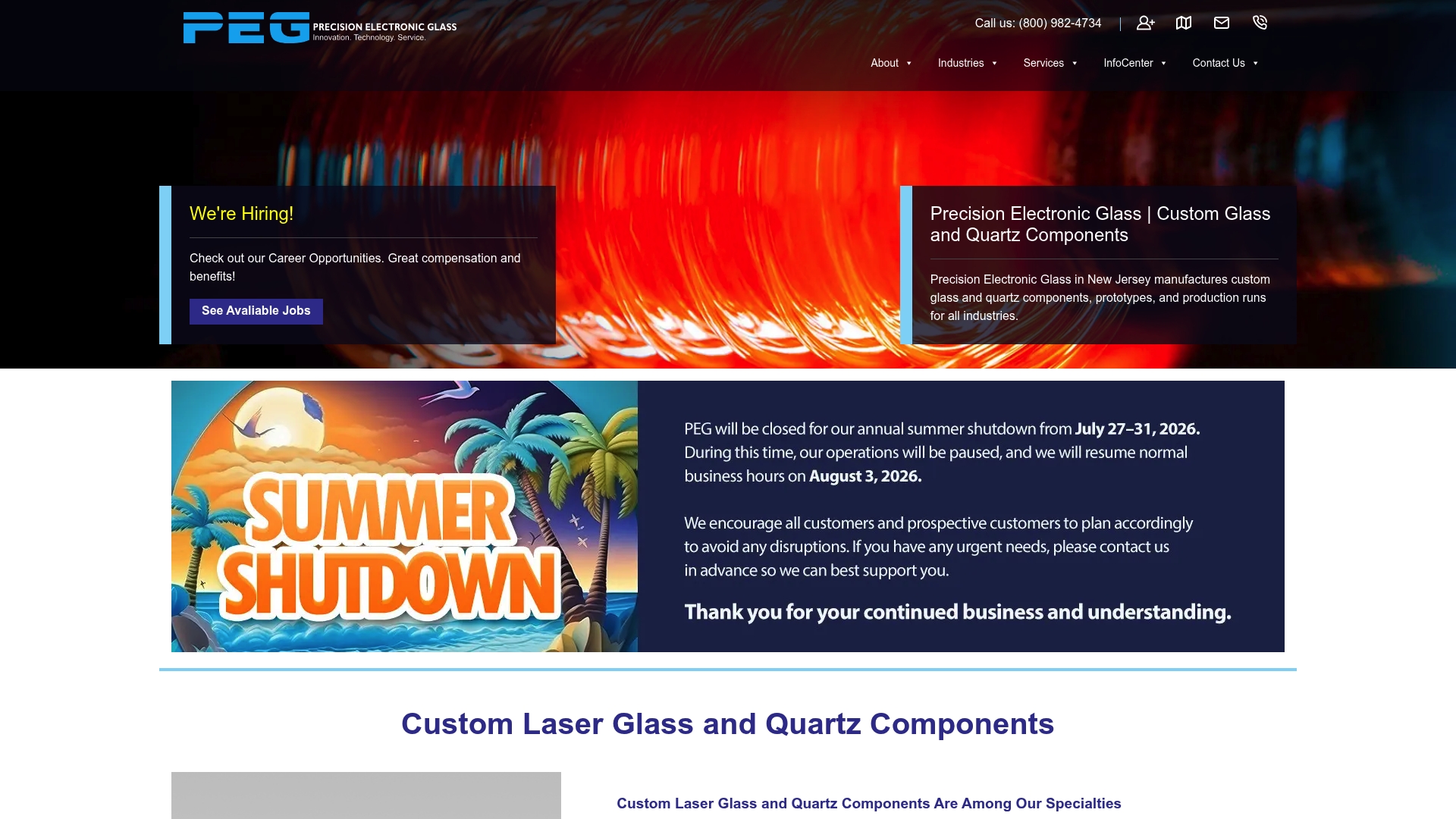
The vendor states ISO 9001:2015 certification and more than 60 years of family-run manufacturing experience. PEG specialises in bespoke glass and quartz component work for labs, medical devices, aerospace, and industrial uses. It lists services from prototyping through production with machining, laser engraving, and glass-to-metal sealing.
Core Features
Precision Electronic Glass handles custom glass and quartz component manufacturing alongside prototyping and small or large production runs. The service set includes glass fabrication, grinding, polishing, CNC machining, laser engraving, and precision bore tubing work for seals. Value-added assembly and engineering support complete the offering for projects that move from prototype to repeatable production.
Key Differentiator
That combination of flexible engineering processes, the certification above, and a long family history sets PEG apart for clients who need close engineering collaboration. The vendor emphasises tailor-made solutions and works on components requiring tight tolerances and specialised finishing. That focus suits projects where off-the-shelf parts will not meet specification.
Pros
Precision Electronic Glass demonstrates clear strength in producing custom, high-precision glass and quartz parts for technical applications. The company highlights ISO 9001:2015 quality management, which supports repeatable processes and documented quality control. Its service breadth covers machining, engraving, sealing, and assembly, which reduces handoffs between suppliers. The vendor also points to a long family business history that underpins institutional know-how for complex prototypes and regulated device components.
Cons
- No third-party reviews are publicly available to independently verify customer satisfaction or part performance.
- Publicly available case studies and user feedback are limited, possibly due to confidentiality in regulated markets.
- Pricing is not published online, so lead times and cost must be confirmed directly with PEG.
When It May Not Fit
Projects that need standard, off-the-shelf glass components will find PEG’s bespoke focus misaligned with their needs. High-volume consumer goods where price per part is the primary criterion may require a moulded glass supplier instead. Buyers who require transparent, published pricing or public user reviews will need to accept direct engagement and nondisclosure constraints.
Who It’s For
Design engineers, research institutions, medical device manufacturers, and industrial OEMs needing specialised glass or quartz parts with tight tolerances will find the offering relevant. Procurement teams that prefer a single supplier for machining, finishing, and assembly benefit from the consolidated service set. Those working in regulated sectors who require documented quality management will value the certification above.
Real World Use Case
A biotech firm worked with PEG to develop custom quartz flow chambers for high-sensitivity analytical equipment. PEG supplied prototype iterations with precision bore tubing and laser-engraved alignment marks, then moved to small-volume production. The consolidated engineering and assembly reduced vendor coordination for the instrument builder.
Pricing
PEG does not publish standard prices or package tiers online. Pricing is handled by custom quotation, reflecting part complexity, materials, and production volume. Contacting PEG with drawings and tolerances yields a formal quote and lead-time estimate.
Website: https://pegglass.com
Swift Glass
At a Glance
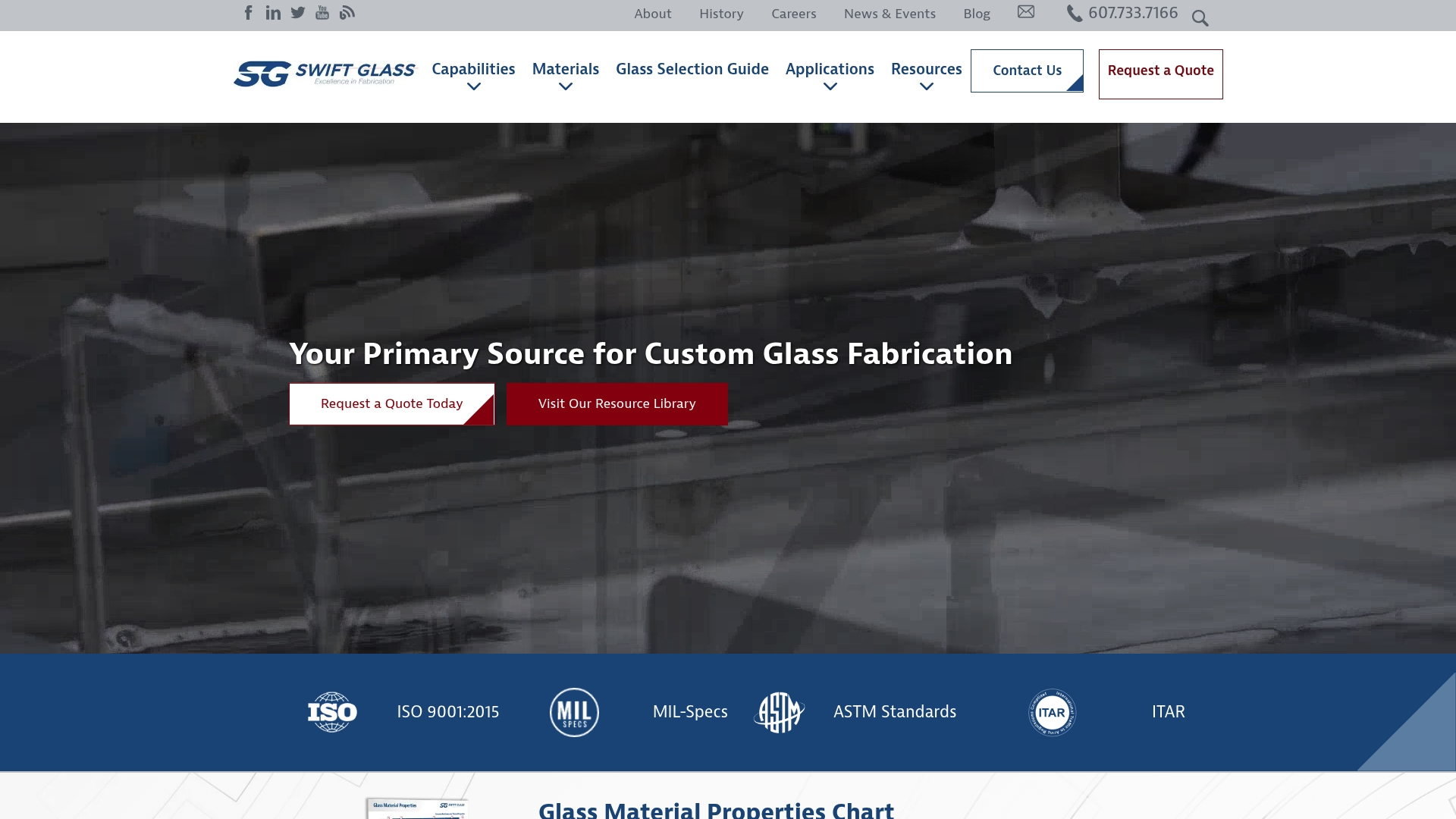
Swift Glass reports ISO 9001:2015 certification and ITAR registration. That claim underlines the firm’s focus on regulated, defence and aerospace supply chains. The company also holds a broad materials inventory that includes Gorilla® Glass and fused silica.
Core Features
Swift Glass combines CNC machining, waterjet cutting, tempering and polishing in a single production flow, giving tight control over tolerances and surface finish. The firm stocks borosilicate, fused silica, Gorilla® Glass, low iron glass and quartz, and supports projects with datasheets, ebooks and a project portfolio. Specialist work for aerospace, medical and photonics applications forms a regular part of its workload.
Key Differentiator
All core fabrication stages happen under one roof, so the fabricator keeps process control from cutting through final inspection. That arrangement supports quality assurance and traceability for regulated contracts. This single site approach is aimed at buyers who need consistency across CNC work, tempering and polishing.
Pros
Swift Glass delivers prompt, professional responses and a helpful engineering desk that clarifies material choices and manufacturability. High quality workmanship and a deep materials inventory reduce the need to source subcomponents elsewhere. Client feedback cited reasonable pricing for bespoke runs and effective problem resolution when delivery issues arose. The combination of technical support and practical shop floor capability makes short production iterations viable.
Cons
- Shipping delays can occur on international consignments, and these delays are sometimes outside the company’s control.
- Some reviewers reported delivery issues, although the vendor resolved those cases through follow up and replacements.
- Public information lacks clear pricing tiers and standard lead times, which makes quick budget estimates difficult.
Who It’s For
You run a manufacturer, research group or prime contractor that needs precision, project specific glass parts and formal quality controls. You want a supplier able to handle CNC work, tempering and optical polishing without transferring stages between vendors. You prioritise traceability and materials choice for aerospace, medical or photonics projects.
Real World Use Case
A medical device manufacturer contracted Swift Glass to produce precision cut, tempered glass components for diagnostic equipment. The supplier handled CNC cutting, polishing and tempering while supplying datasheets for material properties. That delivered parts compliant with the purchaser’s incoming inspection and project schedule.
Pricing
Public pricing is not listed. The vendor labels pricing as “Not applicable, informational only” and treats quotes as project specific. Expect price estimates to be provided per job after material selection and drawing review.
Website: https://swiftglass.com
Specialty Glass Products (SGP)
At a Glance
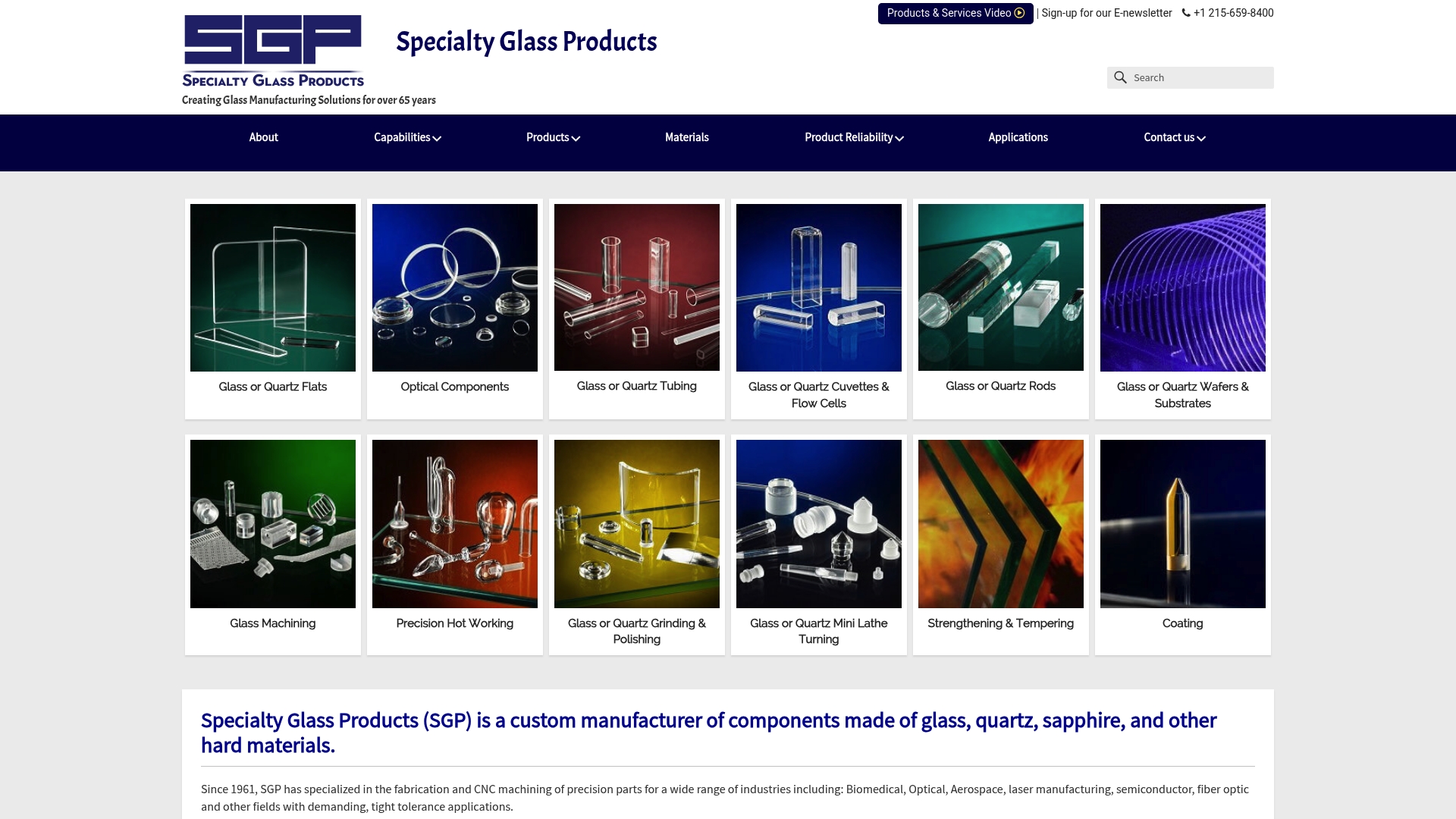
Since 1961, SGP has supplied precision glass, quartz, and sapphire components to biomedical, optical, aerospace, and semiconductor firms. The company fabricates flats, optical lenses, tubing, cuvettes, rods, and wafers to tight tolerances. It combines CNC work with strict quality control and uses premium raw materials from recognised suppliers.
Core Features
SGP offers custom fabrication and CNC machining for glass, quartz, and sapphire parts, with options for coatings and fine surface finishes. Typical product types include flats, optical components, and wafers, plus tubes, cuvettes, and rods suitable for optical and analytical equipment. The shop sources materials from established names and maintains precise tolerances across small and medium batch runs.
Key Differentiator
The single defining trait is SGP’s long history of supplying specialty materials while serving multiple demanding sectors. The company pairs legacy manufacturing know how with material sourcing from vendors such as Corning® and SCHOTT to meet tight specification windows. That combination makes SGP a reliable option when material pedigree matters.
Pros
Third party reviews praise SGP’s supportive and responsive customer service and note reasonable replacement costs for parts. The firm delivers high quality manufacturing with rigid inspection routines and repeatable surface finishes. Its broad product range and custom options suit projects that require bespoke glass shapes and optical components made from trusted suppliers.
Cons
- Occasional product malfunctions have been reported in third party reviews, which suggest spot checks before integration.
- Public facing site content lacks detailed product pages and specific technical data for many items, making remote specification work harder.
- Expect extra lead time to obtain full drawings or measurement data when online documentation is missing.
When It May Not Fit
If you need an online catalogue with downloadable CAD files and full datasheets, SGP may not be the best fit. Projects that require instant digital specification and automated ordering could find the content gaps frustrating. Also, buyers who cannot accept any risk of early stage defects should plan for incoming inspection and contingency.
Who It’s For
Manufacturing engineers, procurement leads, and design teams in biomedical, aerospace, optical, semiconductor, and laser firms that require custom glass, quartz, or sapphire parts. You will benefit when project success depends on precise tolerances, tailored shapes, and material traceability from known suppliers.
Real World Use Case
A biotech equipment vendor contracted SGP to supply custom glass cuvettes for a diagnostic instrument. Engineering collaborated with SGP’s shop to lock tolerance stacks and surface finish targets, then inspected first articles on receipt. The result met optical path and handling requirements for the instrument.
Pricing
SGP does not publish pricing online. Project quotes are provided on a job by job basis, reflecting material choice, machining effort, and inspection requirements. Contact SGP for a formal estimate and lead time for your specific part.
Website: https://sgpinc.com
Glas Werk, Inc.
At a Glance
Glas Werk combines traditional glassblowing with advanced robotics and precision machining to produce bespoke quartz parts. The company serves semiconductor, biomedical, fibre optics, solar, and scientific research customers. Glas Werk, Inc. reports over 30 years in business, and it holds ISO 9001:2015 certification.
Core Features
Glas Werk offers custom fabrication of quartz and glassware alongside engineering and design assistance, repair, and refurbishment services. Their workshop capabilities include glass blowing, precision machining, welding, and the refurbishment of worn or damaged quartz components. The product range covers wafer carriers, process tubes, chambers, optical components, and laboratory vessels, supported by an enforced ISO 9001:2015 quality system.
Key Differentiator
The company blends artisan glassblowing techniques with robotics and CNC-style machining to meet tight tolerances for bespoke quartz solutions. That combined approach supports repeatable geometries that manual methods alone cannot deliver. This mix suits projects that must balance optical quality with mechanical precision.
Pros
Glas Werk produces high quality custom quartz products tailored to specific specifications, which helps when off-the-shelf parts fail to meet process demands. The firm reports long operational tenure, and that tenure contributes to deep process knowledge across semiconductor and scientific applications. Its service scope covers design through manufacture and repair, reducing the number of suppliers you must manage for lifecycle support.
Cons
- No specific third party reviews are publicly available, so buyer experiences remain unverified.
- Public details on pricing and lead times are limited, requiring direct inquiry for accurate planning.
- Custom, high precision work can carry higher cost, making small one off projects comparatively expensive.
When It May Not Fit
If you need catalogue parts with short lead times, Glas Werk may not be the right fit due to custom production workflows. Projects with very tight capital limits could find quoted costs prohibitive for bespoke fabrication. Volume needs that favour commodity glass suppliers will likely achieve lower per unit costs elsewhere.
Who It’s For
Manufacturers and research institutions requiring durable, high precision quartz and scientific glassware will find the company relevant. Teams designing process equipment for semiconductor or optical systems will value design support and repair capabilities. Organisations that need lifecycle support for specialised glass components will benefit from a single supplier handling design to refurbishment.
Real World Use Case
A semiconductor manufacturer required custom quartz process tubes that resist high temperatures and corrosive chemistries. Glas Werk collaborated on the design, then produced and refurbished tubes to the client specification. The supplier also repaired damaged components on repeat orders, reducing the client’s equipment downtime.
Pricing
Pricing is inquiry based and not publicly listed. You must request a quote for each custom job, and lead time estimates come with the quotation. Expect bespoke work to be priced above commodity glassware due to material handling and precision processes.
Website: https://glaswerk.com
Rochester Precision Optics (RPO)
At a Glance
A single facility combines glass molding, diamond turning, CNC fabrication and optical assembly under one roof. That vertical control supports both prototyping and volume manufacturing for imaging and infrared optics. The company focuses on lenses and electro optical assemblies for night vision, medical and aerospace use.
Core Features
RPO supplies design and engineering support alongside in house manufacturing for glass molding, plastic molding and precision optical fabrication. The product range covers standard lenses, night vision assemblies and custom components, with advanced coatings such as anti reflective and diamond like films. RPO’s marketing materials state compliance with ISO 9001, which the vendor links to its quality assurance processes.
Key Differentiator
The most notable strength is having glass molding, diamond turning, CNC fabrication and optical assembly all controlled in house. That arrangement gives direct oversight of material selection, coating application and final assembly. For buyers focused on repeatable production, that single supplier model reduces hand offs and simplifies quality traceability.
Pros
Vertical integration reduces coordination across suppliers and makes hand offs less frequent during design to production work. Specialisation in night vision and infrared optics offers expertise for defence and security programmes that need specific optical performance. A broad set of material and coating options lets engineers tune optical transmission and surface durability for imaging, medical optics or sensor windows. Support for both early prototypes and volume runs helps teams move from concept validation to production without changing manufacturers.
Cons
- No third party reviews are publicly available, which leaves independent performance feedback scarce.
- Pricing and lead time details are not published, so procurement will need to request custom quotes for each project.
- Complex customisation can demand extended engineering lead time, increasing early programme schedules.
- The specialised offering may require a technical contact rather than a purely commercial buyer.
When It May Not Fit
If you need off the shelf lenses with transparent, posted pricing, this supplier will be a poor match. Small scale makers seeking fast, low cost one off parts will likely find project minimums and engineering effort disproportionate. If your team lacks an optical engineer, working with RPO will require technical support or a partner to translate specifications.
Who It’s For
Engineers and procurement teams in defence, aerospace, medical device and imaging sectors who need repeatable, high precision optics for production volumes. R&D groups planning a transition from prototype to manufacture will find the integrated capabilities useful. This suits buyers that can provide technical requirements and accept a project quote process.
Real World Use Case
A defence contractor worked with RPO to develop and mass produce night vision lenses and assemblies for goggles. RPO handled tooling for molded glass lenses, applied specialised coatings and supported optical assembly for the final units.
Website: https://rpoptics.com
Comparison of alternatives
In the competitive sphere of precision glass manufacturing, the featured companies stand out for their unique approaches and specialised services. These organisations differ in their capabilities, unique offerings, and target markets, creating a diverse landscape for prospective clients to consider.
Support for engineering-intensive projects
GlassPrecision sets itself apart with its engineering-led process. By incorporating a design review at the start of a project, it prioritises manufacturability and material selection, effectively minimising design ambiguities before production begins. This methodology particularly benefits sectors with stringent environmental and optical requirements, such as defence and aerospace. In comparison, competitors like Swift Glass and Specialty Glass Products also provide project-specific glass manufacturing; however, they focus less on early-stage engineering input and more on the manufacturing execution phase.
Repair and lifecycle management
Glas Werk, Inc., employs a notable combination of glassblowing, advanced robotics, and precision machining to deliver high-quality custom quartz solutions. Furthermore, the company’s repair and refurbishment services for quartz components add significant value, especially for projects requiring extended equipment lifecycle support. This dimension represents a distinct offering not readily available among its mentioned competitors, including GlassPrecision.
Best fit
- Precision-driven projects that require thorough early-phase engineering analysis will find GlassPrecision ideally suited for ensuring manufacturability and material compatibility.
- Projects in need of repairs or lifecycle management for existing equipment will benefit from Glas Werk, Inc.’s refurbishment capabilities.
- Customers requiring an extensive selection of vendor-verified top-tier materials for demanding projects would leverage Specialty Glass Products (SGP).
Our pick
After examining the capabilities and strengths of the reviewed companies, GlassPrecision stands out as the choice, particularly for projects that demand rigorous quality control, proactive engineering planning, and precise glass component manufacturing. While competitors like Glas Werk excel in lifecycle services and SGP in material variety, GlassPrecision provides upfront engineering integration and project scope optimisation, which ensures elevated project success rates. However, in cases where refurbishment or commodity glass procurement is a necessity, exploring other options could be more advantageous.
Choosing a provider for precision glass components requires evaluating options that prioritise material quality, engineering input, and manufacturing capabilities.
| Product | Core Feature | Key Differentiator | Best For | Pricing | Notable Limitation |
|---|---|---|---|---|---|
| GlassPrecision | Custom glass manufacturing services | Engineering-led design review and quality control | Aerospace, defence, and medical | Price not published | Requires precise specifications early in projects |
| Precision Electronic Glass | Bespoke glass and quartz component manufacturing | Combination of prototyping and production services | Medical devices and scientific research | Price not published | Limited public case studies and reviews |
| Swift Glass | CNC machining, tempering, and polishing services | Single-location production control | Medical, photonics, and aerospace | Price not published | Shipping delays reported on international consignments |
| Specialty Glass Products (SGP) | Custom fabrication for glass, quartz, and sapphire | Long history and material sourcing expertise | Biomedical, aerospace, optical sectors | Price not published | Public access to detailed documentation limited |
| Glas Werk, Inc. | Custom quartz fabrication and repair | Combining glassblowing with robotics and precision machining | Semiconductor and scientific applications | Price not published | Higher cost for bespoke projects compared to standard parts |
| Rochester Precision Optics (RPO) | Optical assembly and fabrication | Vertical integration of glass moulding and fabrication | Defence, aerospace, medical device | Price not published | Requires technical expertise during customisation |
Facing Challenges Finding Reliable Kingprecision.com Alternatives
Choosing the right supplier for precision glass components involves overcoming hurdles such as unclear design specifications and limited quality assurance. Engineers and procurement teams in defence, aerospace, and medical device sectors often require early engineering input and full traceability to meet strict tolerances and delivery timelines. Precision Glasses specialises in addressing these needs by integrating engineering-led reviews with custom manufacturing processes.
Precision Glasses offers:
- Tailored glass solutions with meticulous material selection and manufacturability assessments
- Complete traceability and rigorous quality control from prototype to volume production
- Expertise across defence, aerospace, automotive dashboards, lighting, and electronics
Learn more about Precision Glasses capabilities and how they tackle complex project demands. Explore how partnering with Precision Glasses supports design teams and procurement managers with confident, reliable glass programs that meet exacting standards.
FAQ
What type of projects benefit most from Precision Glasses?
Projects requiring custom glass components with exact specifications benefit most from Precision Glasses. The company supports projects from prototype runs to large volume production while maintaining quality assurance standards. Customers should expect tailored solutions for demanding applications such as aerospace, medical devices, and defence.
How does Swift Glass compare with Precision Glasses?
Swift Glass delivers a comprehensive production flow through CNC machining, waterjet cutting, and more, providing strong expertise in regulated supply chains. Precision Glasses excels when strict tolerances and material selection are needed early in a project, making it more suitable for demanding applications where detailed engineering input is critical.
Can I expect traceability with my order from Precision Glasses?
Traceability is guaranteed with Precision Glasses, ensuring documented evidence for acceptance and audit purposes. This feature is crucial for clients in sectors such as defence and aerospace, which often require strict compliance. Getting started with Precision Glasses ensures reliable tracking throughout the manufacturing process.
What makes Rochester Precision Optics a suitable choice for high-volume production?
Rochester Precision Optics offers vertical integration of glass molding, diamond turning, CNC fabrication, and optical assembly under one roof. This closely controlled environment suits high-volume production, while Precision Glasses is more tailored for projects requiring bespoke engineering support before production begins.
How does the engineering review process work with Precision Glasses?
The engineering review process at Precision Glasses clarifies material selection and manufacturability before production starts. This approach reduces late-stage changes and helps ensure parts meet strict specifications, which is vital for industries like aerospace or defence. Clients can anticipate a smoother workflow and timely project progression.