

HUD combiner glass is a semi-reflective optical element, typically a laminated or coated glass plate, that reflects a projected image into the driver’s or pilot’s line of sight while transmitting the scene beyond it. Specify a combiner rather than a full windshield HUD when cockpit space is limited, retrofit is required, or a smaller field of view suits the application. Continental notes that combiner units need roughly half the installation space of windshield HUDs, which is the single biggest reason design teams choose them.
Before you brief a supplier, you’ll want a firm grip on these parameters:
- Field of view (FOV): typically narrower than windshield systems, often single digits in degrees for automotive units
- Virtual image distance: commonly around 2 metres for compact automotive combiners
- Coatings: dielectric multilayer stacks and polarising nanofilms that control P-polarised reflectivity
- Manufacturing tolerances: wedge angle, flatness, and lamination uniformity, all of which govern ghost image suppression
- Primary trade-off: FOV versus packaging space, and brightness versus ambient daylight contrast
Key Takeaways
Precise control of wedge angle, flatness, and polarisation-tuned coatings determines whether HUD combiner glass suppresses ghosting or ships with a visible fault.
| Point | Details |
|---|---|
| Define the verdict first | Combiner glass suits compact cockpits and retrofit projects where a full windshield HUD won’t fit the package. |
| Lock the eye-box early | Set eye-box and virtual image distance before finalising projector placement or FOV targets. |
| Specify polarisation explicitly | Request reflectivity data by polarisation state across your projector’s incidence-angle range. |
| Demand numeric test metrics | Require ghost ratio, luminance, and MTF figures, not subjective quality descriptions, in acceptance testing. |
| Choose a traceable manufacturer | Precision Glasses delivers combiner-grade tolerance control and batch traceability across defence, aerospace, and automotive glass programmes. |
Table of Contents
- How does HUD combiner glass form a virtual image?
- What types of HUD combiner glass are available?
- Where is HUD combiner glass actually used?
- What are the key design trade-offs in combiner glass integration?
- Which materials and coatings work best for combiner glass?
- What manufacturing tolerances matter most for combiner glass?
- What metrics should go in a combiner glass specification?
- What should an RFQ for HUD combiner glass include?
- An engineer’s note on where combiner projects go wrong
- How Precision Glasses supports HUD combiner glass programmes
- Frequently asked questions about HUD combiner glass
- Sources
How does HUD combiner glass form a virtual image?
A HUD combiner glass produces a virtual image by reflecting a collimated beam from a projector unit off a semi-reflective surface, positioning the perceived image at a fixed apparent distance ahead of the viewer rather than on the glass itself. The eye focuses on that virtual plane, not on the combiner, which is why the display appears to float in the driver’s forward view rather than sitting on the dashboard.
Collimation is what makes this work. The projector, usually a picture generation unit built around a TFT or DLP imaging chip, sends light through collimating optics so the rays reach the combiner nearly parallel. That parallel geometry is what lets the eye perceive a distant virtual image instead of a sharp image sitting a few centimetres away on the glass surface. The practical distance depends on the optical path length and mirror curvature behind the combiner. Automotive systems commonly target a virtual image around 2 metres out, matching where a driver’s eyes are already focused on the road.
Two more concepts matter as much as the distance figure. The eye-box is the three-dimensional zone within which the driver’s eyes can move and still see the full image without clipping or vignetting; a tight eye-box forces tighter tolerances everywhere else in the optical chain, from projector alignment to seat position variance.
The eye-point is the design reference position, usually derived from anthropometric seating data, that the whole optical path is centred on.
Ghosting is the recurring headache. Any glass surface produces a secondary reflection alongside the primary one, and if the combiner has parallel faces, both reflections land close enough together to blur the image into a faint double. Wedge angles between the front and back surfaces, and controlled lamination, shift the secondary reflection out of the visible cone. Polarisation is the other lever: many combiner coatings are optimised specifically for P-polarised light, because P-polarised reflectivity behaves differently across incidence angle than S-polarised light, and a patent covering transparent nanofilm stacks for HUD glass describes multilayer high and low refractive index films tuned to raise P-polarised reflectivity across incident angles of roughly 38° to 85°, directly reducing ghost visibility and enabling wider fields of view.
A useful working diagram to sketch on your own layout: projector beam leaving the picture generation unit, hitting the combiner at the design incidence angle, splitting into a primary reflection toward the eye-box and a weaker secondary reflection from the rear surface, with both paths converging (or ideally not converging) at the virtual image plane.
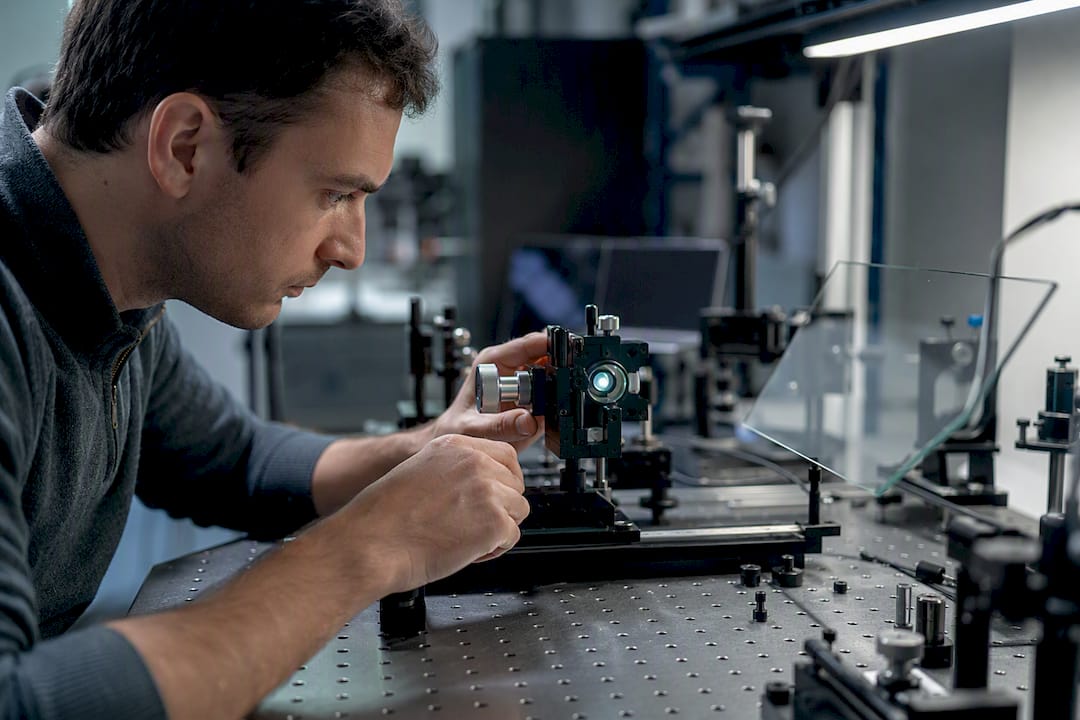
Pro Tip: Lock down your projection incidence-angle range and polarisation strategy in the optical requirements document before you approach a glass supplier. Changing either late in the programme usually means re-cutting the coating stack from scratch.
What types of HUD combiner glass are available?
Four canonical approaches dominate combiner design, and the deciding factor for each is usually installation space, required FOV, or augmented reality ambition rather than cost alone. Wikipedia’s overview of automotive HUD design frames the choice as one of three routes: use the windshield itself, fit a separate combiner, or laminate a display element directly into the windscreen. A fourth route, waveguide and holographic optical elements, has emerged since as AR ambitions have grown.
- Separate plate or retractable combiner. An independent semi-reflective element sits between the driver and the windscreen, often folding away when not in use. It’s compact, relatively cheap to retrofit, and the DLP Automotive Academy’s technical overview notes this configuration suits vehicles with limited dashboard depth, though FOV stays modest.
- In-windshield laminated combiner. A functional interlayer or coating is built into the windscreen laminate itself, eliminating a separate moving part. It demands tighter coordination with the glazing supplier but removes retractable mechanisms and their failure modes entirely.
- Coated laminate with nanofilm or polarising stacks. This is a variant of either approach above, where the optical performance comes from a dedicated coating rather than substrate geometry alone. A patent on optical laminates using functional wavelength plates describes half-wave and quarter-wave plate layers, or circular polariser stacks, engineered into the laminate to control polarisation and suppress ghosting without adding a separate combiner element.
- HOE or waveguide alternatives. Holographic optical elements and waveguide combiners can deliver wider AR fields of view than conventional glass combiners, at higher cost and with more demanding manufacturing control.
For compact passenger cars, a separate retractable combiner or a coated laminate usually wins on cost and packaging. Large-cockpit aircraft and military platforms lean toward in-windshield or dedicated combiner glass built to certification standards, where robustness outweighs unit cost. Retrofit and aftermarket units are almost always separate plate designs, since they cannot depend on OEM windscreen integration.
Where is HUD combiner glass actually used?
Combiner glass earns its place wherever compactness and a controlled field of view matter more than an expansive, immersive display. That single priority explains most of the sector variation you’ll see.
- Automotive. Dashboard depth is limited and daytime luminance has to compete with direct sunlight, so combiners are specified for peak brightness and a virtual image distance that keeps the driver’s eyes near the road. Valeo’s combiner HUD product data quotes figures such as a 6.8° by 2° field of view, a 2 metre virtual image distance, and peak brightness up to 15,000 cd/m² for one automotive system, giving engineers a realistic benchmark range.
- Aerospace. Pilot HUDs demand certification-grade robustness, precise eye-box control for a fixed seating position, and optical performance that holds under vibration and temperature extremes far beyond automotive requirements.
- Defence. Military HUDs add night vision goggle (NVG) compatibility and ruggedisation on top of aerospace-grade optical demands, often trading FOV for reliability under combat conditions.
- Retrofit and aftermarket. Add-on combiner units serve fleets and older vehicles, but safety-critical certification is rarely available at this tier, which limits their use in regulated commercial or defence contexts.
Across every sector, the same handful of targets recur in a specification: virtual image distance, peak luminance, contrast ratio against ambient light, and whether the platform needs augmented-reality overlay capability at all.
What are the key design trade-offs in combiner glass integration?
The one-line design rule engineers repeat is this: settle the eye-box and apparent image distance first, because packaging constraints then dictate everything else, including FOV and projection geometry. Get that sequence backwards and you’ll spend a redesign cycle discovering the projector can’t physically hit the incidence angle your coating was optimised for.
A practical integration checklist, in the order most programmes actually work through it:
- Eye-box budgeting. Define the seating envelope and head movement range you must cover, then size the eye-box before choosing projector optics.
- Projector placement. Fix the picture generation unit position relative to the combiner, respecting the incidence-angle range your coating stack is designed around.
- Virtual image distance. Set the target distance based on where the driver or pilot’s eyes are already focused, not an arbitrary round number.
- Polarisation strategy. Decide early whether you’re relying on a nanofilm stack, a wavelength-plate laminate, or a simpler dielectric coating, since each imposes different tolerances downstream.
- AR pixel registration. If the system overlays graphics onto real-world features, confirm registration accuracy holds across the full eye-box, not just the design eye-point.
- Thermal paths and EMI shielding. Combiner assemblies sit near heat-generating projector units and often near vehicle electronics; plan thermal dissipation and shielding before finalising the housing.
Watch for these red flags during supplier review: wedge angle left uncontrolled or unspecified, polarisation stacks proposed without incidence-angle test data behind them, ghost ratio described qualitatively rather than measured, luminance specs that look fine on a datasheet but haven’t been validated against direct sunlight, and no stated compatibility check against polarised sunglasses or NVG optics.
Pro Tip: When specifying a retractable mechanism, budget the mechanical tolerance stack separately from the optical tolerance stack. A combiner that meets every optical spec on the bench can still drift out of alignment if the retraction hinge has more play than the eye-box allows. Our glass component design guide walks through tolerance stacking in more depth for exactly this kind of assembly.
Which materials and coatings work best for combiner glass?
Substrate and coating choice together control four things: reflectivity, ghosting, polarisation behaviour, and how the combiner ages in service. Get any one of them wrong and the optical spec you signed off on the bench won’t survive a UK summer dashboard.
- Substrate options. Float glass suits low-cost, lower-performance applications; low-iron optical glass reduces the green tint visible in thicker laminates and is standard for anything with brightness or colour-accuracy requirements; chemically strengthened or toughened laminates add impact resistance for automotive and defence use where a shattered combiner is a safety issue, not just an inconvenience.
- Dielectric multilayer stacks. These build reflectivity at the target wavelength range while staying transparent elsewhere, the foundation for most modern combiner coatings.
- Polarising nanofilms. As covered in the physics section, these selectively boost P-polarised reflectivity across a defined incidence-angle range, directly suppressing ghosting.
- AR and conductive coatings. Anti-reflective layers reduce unwanted background glare from the scene beyond the combiner, while conductive IR coatings can double as demisting or heating elements, a detail worth checking against our guide to low-e glass in automotive applications.
Coating choice also dictates cleanability. Harder dielectric stacks generally resist scratching better than soft polarising films, so if the combiner sits somewhere a driver might wipe with a cloth or sleeve, factor abrasion resistance into the coating selection, not just optical performance.
What manufacturing tolerances matter most for combiner glass?
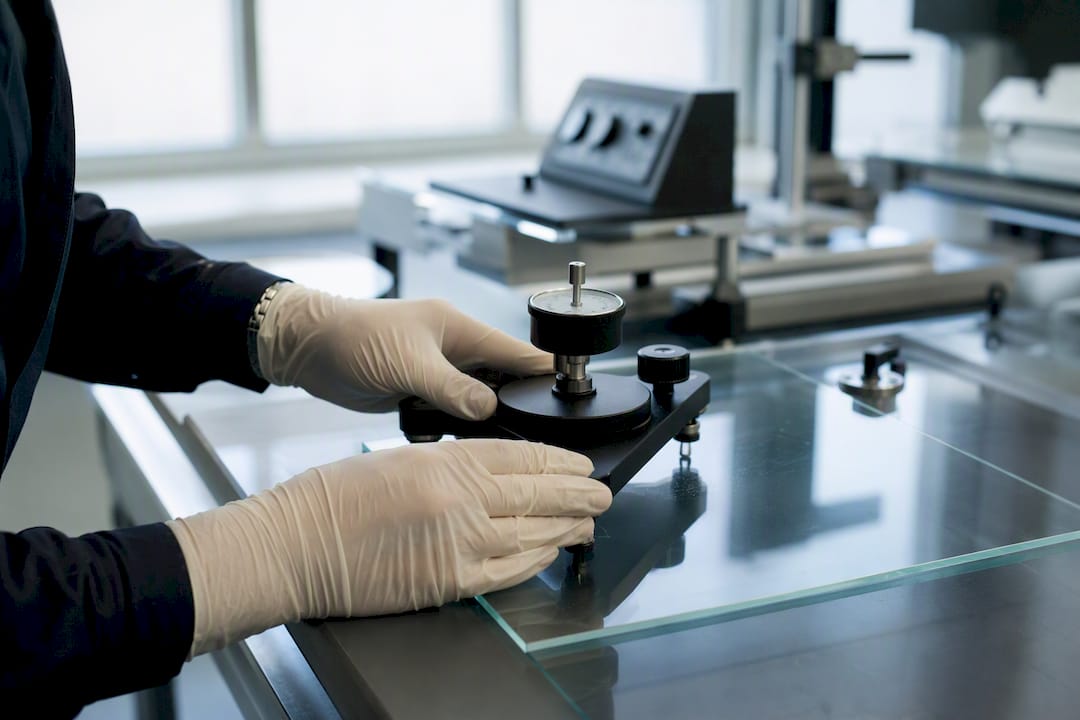
Ghost suppression and image registration both come down to four measurable production parameters: flatness, wedge angle, lamination uniformity, and edge quality. Loosen any of these and the optical model you built in simulation stops matching what comes off the line.
| Parameter | What it controls | Typical target range |
|---|---|---|
| Flatness / figure | Wavefront distortion and image sharpness | Sub-wavelength deviation over the aperture, per interferometric measurement |
| Wedge angle | Ghost image separation | Precisely controlled non-zero angle, specified per design, not left to process default |
| Thickness uniformity | Consistent optical path length across the aperture | Tight tolerance band matched to the lamination interlayer spec |
| Surface roughness | Scatter and haze | Fine-polish finish appropriate to optical-grade glass |
Composite-pane patent literature describes exactly this approach: anti-reflective coatings combined with wedge or variable-thickness interlayers deliberately shift secondary reflections out of the visible ghost zone, sometimes paired with conductive coatings for heating or de-icing duty.
Build a QA checklist into your procurement document covering interferometric flatness measurement, spectral reflectivity and AR testing across the specified angle range, coating adhesion tests, and a delamination screen for the finished laminate. Our automotive glass quality checklist gives inspectors a working template for exactly these checkpoints.
What metrics should go in a combiner glass specification?
Require numeric pass or fail metrics from every supplier, not subjective descriptions like “low ghosting” or “bright enough.” A number either meets the acceptance threshold on the test bench or it doesn’t.
The essential metrics, with the test method each one demands:
| Metric | Test method | Notes |
|---|---|---|
| Reflectivity by polarisation | Spectral reflectance across P and S states, multiple angles | Match to your projector’s incidence-angle range |
| Ghost-image ratio | Direct optical comparison of primary vs secondary reflection intensity | State the acceptable ratio numerically |
| Luminance | Photometric measurement in cd/m² | Valeo’s automotive figures reach up to 15,000 cd/m² peak brightness |
| Contrast ratio | Measured under a specified ambient illumination level | Daylight readability is the usual failure point |
| MTF / resolution | Line-pair resolution test for HUD text and graphics | Critical for AR overlay legibility |
| Eye-box dimensions | Physical measurement across the design eye-point envelope | State minimum acceptable dimensions, not a single point |
Add measurement angle, polarisation state, spectral range, and environmental preconditioning as contract line items. A supplier who can’t produce test reports against these conditions hasn’t actually validated the part; they’ve validated a sample under whatever conditions happened to be convenient.
What should an RFQ for HUD combiner glass include?
An engineer-ready checklist maps directly onto both your procurement requirements and the factory’s inspection points, which saves a round of clarifying emails once quotes start coming back.
Include these items in every RFQ:
- Target virtual image distance and field of view
- Eye-box dimensions and design eye-point
- Reflectivity requirements broken out by polarisation state
- Wedge angle tolerance and flatness specification
- Environmental ratings: temperature range, humidity resistance, vibration tolerance, UV exposure durability
- Batch-level traceability requirements for regulated sectors
Precision Glasses brings manufacturing experience across medical devices, defence, aerospace and automotive dashboard glass, which means the same tolerance discipline that governs a scanner window or sensor housing carries over directly into combiner glass production. Our HMI glass manufacturing capability covers the coating, lamination, and inspection processes a combiner programme needs from prototype through to batch production.
Before selecting a supplier, ask directly: what alignment procedure do you use during lamination, what coating durability data can you provide against UV and thermal cycling, how is batch traceability recorded, and what test reports accompany each shipment?
An engineer’s note on where combiner projects go wrong
The single most common specification omission isn’t a missing number, it’s a missing sequence. Teams write down a target FOV and virtual image distance without first confirming the eye-box those numbers imply is achievable given the seating package they’ve already locked. By the time optics and mechanical teams compare notes, the combiner geometry and the dashboard geometry have been designed against two different assumptions.
The practical fix is boring but effective: verify the eye-box against the physical mockup before any coating stack gets finalised, not after. Alexandra
How Precision Glasses supports HUD combiner glass programmes
Precision Glasses manufactures to the tolerance and traceability standards that combiner glass demands, drawing on the same coating, lamination, and inspection disciplines used across our defence, aerospace, and automotive dashboard glass work. Where a generic glazing supplier might quote a flatness figure without the interferometric data to back it, our process is built around exactly that kind of verification from prototype onward.

If you’re specifying a combiner programme, Precision Glasses can support you with:
- Rapid prototyping against your optical and mechanical requirements
- Custom coating stacks, including polarising and anti-reflective layers
- Batch-level traceability for regulated sectors
- Tolerance control on flatness, wedge angle, and lamination uniformity
- Test support and reporting against your specification metrics
Explore our technical glass capabilities for combiner and display applications, or get in touch to request a project quotation for your next HUD combiner programme.
Frequently asked questions about HUD combiner glass
What is the difference between a combiner HUD and a windshield HUD?
A combiner HUD reflects the projected image off a separate semi-reflective element positioned between the driver and windscreen, while a windshield HUD projects directly onto the windscreen itself.
What field of view can I expect from HUD combiner glass?
Field of view varies by product and application, but Valeo’s automotive combiner examples quote figures such as 6.8° by 2°, noticeably narrower than full-windshield AR-HUD systems. Narrower FOV is the trade-off for the compact packaging combiners offer.
How does polarisation affect combiner glass performance?
Polarisation-selective coatings boost reflectivity for P-polarised light across a defined incidence-angle range, which suppresses secondary ghost reflections and supports a clearer primary image. Patent-covered nanofilm stacks report effective performance across roughly 38° to 85° incidence angles.
What tolerances should I specify for combiner glass flatness and wedge angle?
Flatness should hold to sub-wavelength deviation across the optical aperture, verified interferometrically, while wedge angle needs to be precisely controlled and non-zero by design to separate ghost reflections from the primary image. Leaving either as a process default rather than a specified value is the most common source of rejected parts.
Can HUD combiner glass be retrofitted to existing vehicles?
Yes, separate plate or retractable combiners are the standard retrofit and aftermarket approach, since they don’t require windscreen integration. Safety-critical certification is rarely available at this tier, so retrofit units generally suit convenience applications rather than regulated commercial or defence use.
Sources
- Continental Presents Combiner Head‑up Display – Continental AG
- EP4169757NWA1 (patent document) — optical laminate and functional glass for HUD
- Composite pane for a head-up display with conductive and anti-reflective coating (patent summary)
Recommended
- Advanced glass specifications: Guide for engineers and buyers – Precision Glass
- Innovative glass uses for engineers: 2026 guide – Precision Glass
- Problem-solving engineered glass issues: 2026 guide – Precision Glass
- Medical device glass and industrial display glass: engineer’s guide – Precision Glasses